Category Archives: Indonesia

Fish Organizer

Motorcycle Ride in Jogja

Motorcycling is a way of life in Yogyakarta (equally for men and women). So riding in one going to Prambanan about an hour per way is worthier than any other means and here are some of my pictures – backride perspective.

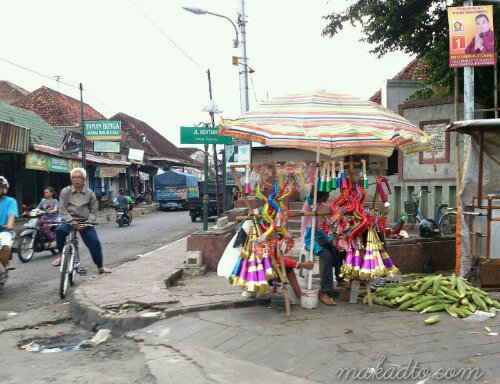
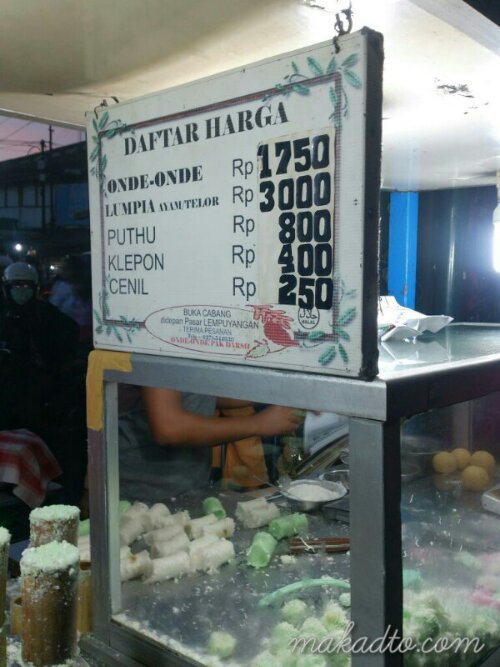
Oleh-oleh shop in the highway that is conveniently on the way to Jogja’s airport.
image

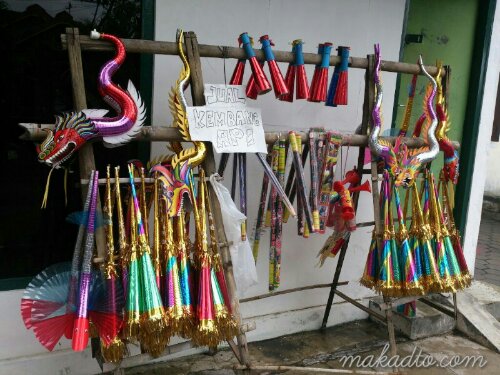
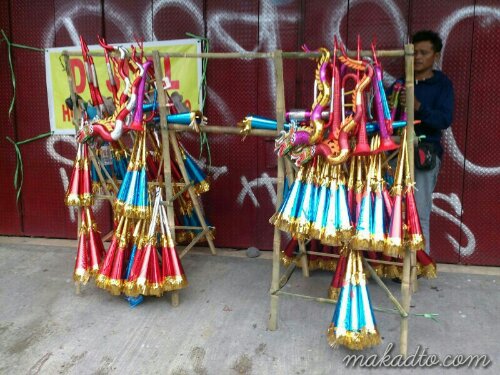
Assortment of horns for welcoming 2014 in the evening. This motorbike ride happened last December 31, 2013, the last thing I did for 2013.
image

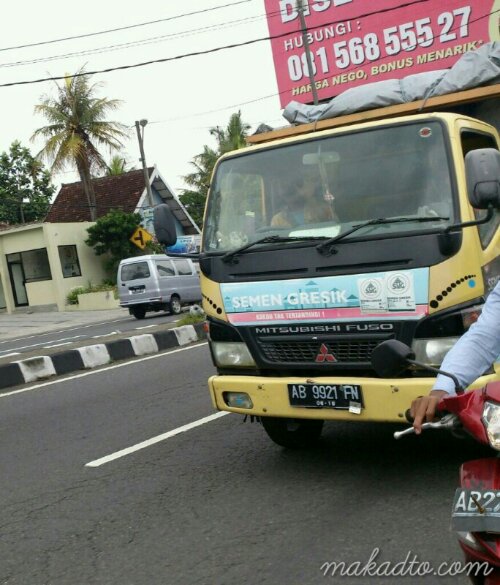
A semen truck! Hehe. The driver I can see was smiling and waving at me balancing at the back of the motorbike twisting my torso so I could look back for a snapshot of his truck. He must have wondered why. Indonesians are very friendly and warm people and they giggle a lot.
image

Truckful of semen.
image

Is that a mosque? That multicolored Moscow-like structure.
image

Motorbike carrying tree branches I think.
image

Stopped for the train to pass.
image

My lady driver who can speak English.
image

And the culmination of the ride – Prambanan Temple Compounds. But truly the to and fro was as educating as the time I spent inside this ancient Hindu temple.
image

Bike Cargo: Clay Stoves

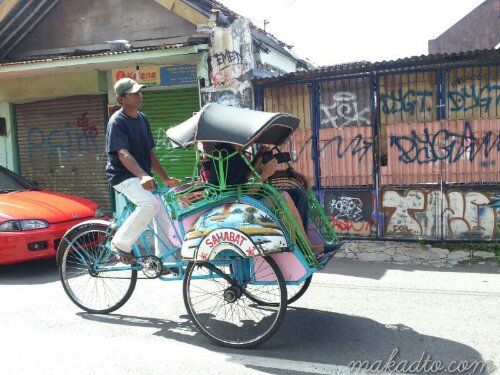
Becak

Tempe

Very common in Javanese diet is this fermented whole soybeans known as tempe (or tempeh).

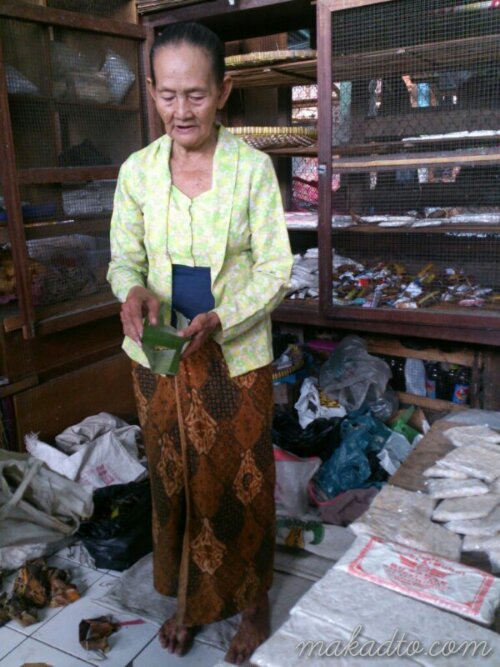
The lady at the market was showing the whole soybeans in banana leaf ready to be fermented inside those sacks in the floor.
image

Fermentation process ongoing in those sacks. After 24 hours one can already enjoy the protein rich tempe.
image

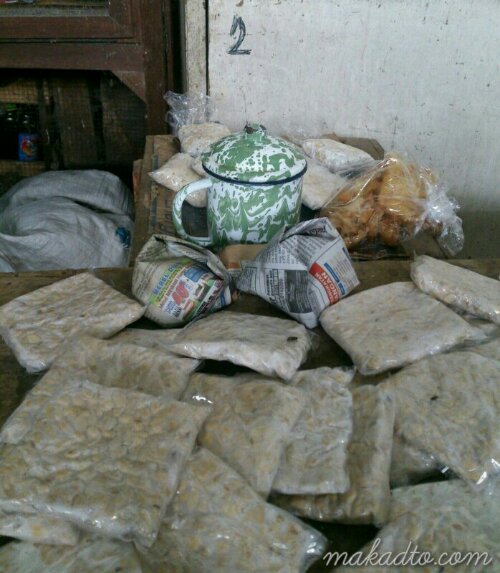
Newly fermented tempe on the table. Still warm when we bought it.
image

image

Slicing tempe in thin strips and frying it till crispy then covering it in caramel sauce using palm sugar will make a perfect accompaniment to spicy dishes.
image

Edible Roof

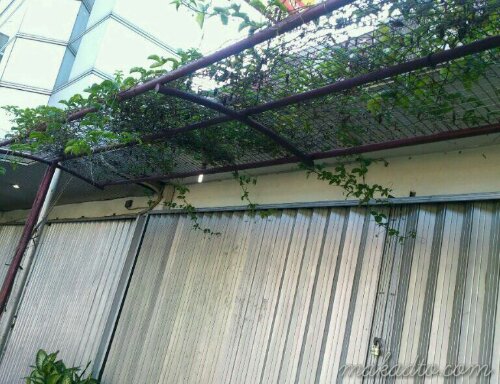
Vine vegetable as roof for sidewalk shed or house entrance arch as seen around Yogyakarta.

Squash vine with huge and ready to cook gourd.  
image

Why not an ampalaya vine as an edible house entrance arch shade with ready to pick bitter gourds.
image

Zucchini vine in this public sidewalk shed.
image

Lesehan

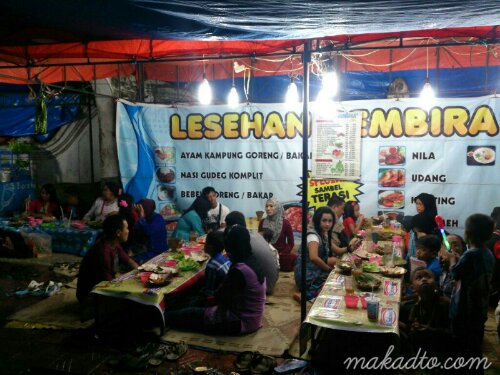
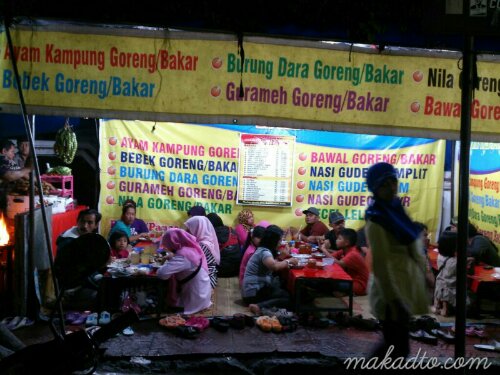
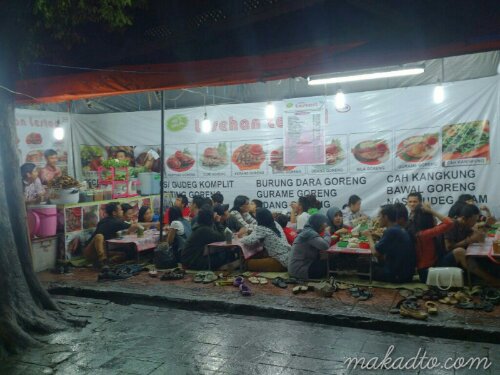
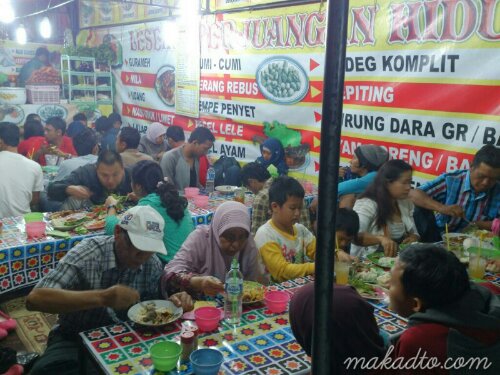
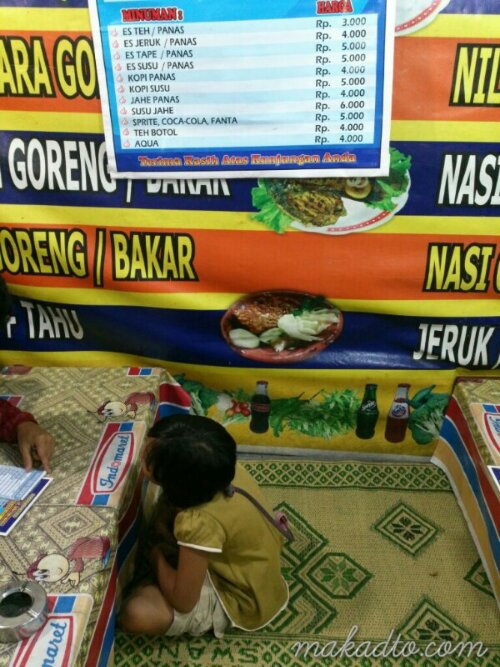
A kind of street restaurant (rather a sidewalk one) minus the chairs. But who needs chairs when one can comfortably sit and eat on the floor. Utensils are optional too but each one gets a bowl of water for handwashing.
image

image

image

image

The floor mat I noticed were those weaved plastic ones.
image

One can always have a typical restaurant dinner anytime in my home country and for occasions such as New Year’s Eve it’s kind of natural thinking for most (who can afford) to celebrate it in fancier restaurants (if eating outside home), in fine dining style. But my last dinner for 2013 was a very satisfying meal of bebek goreng and nasi goreng with lots of sambal, hand as utensils, in lesehan-style.

Javanese Batik: Stamped Ones

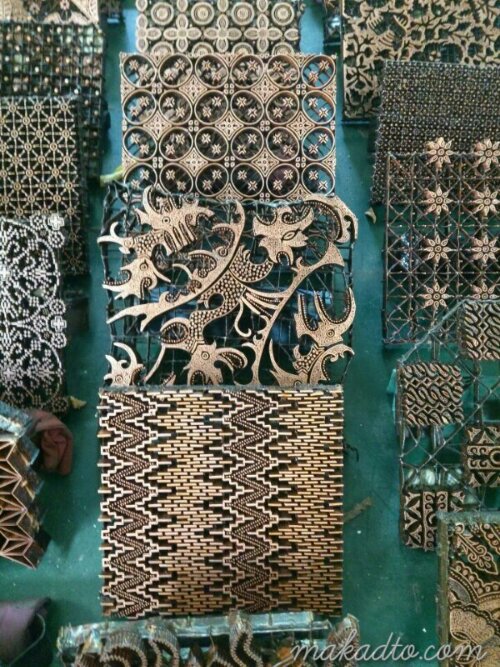
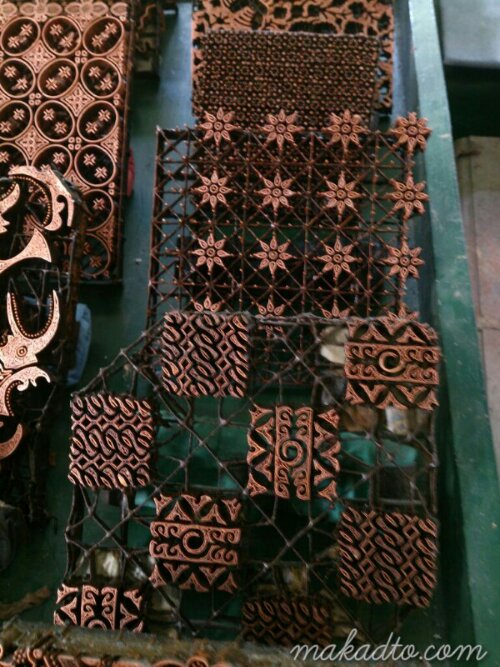
Still handmade as the motif is stamped by hand although in this way one can now mass produce the designs. 

Artisans in Solo created these art in copper blocks.
image

image

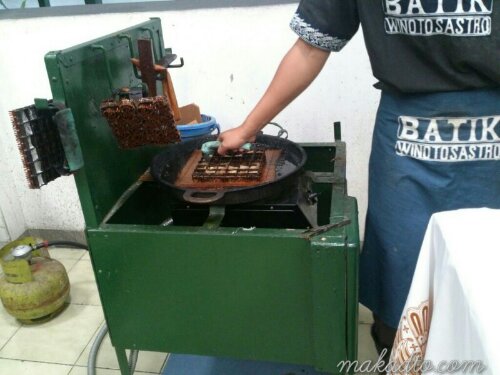
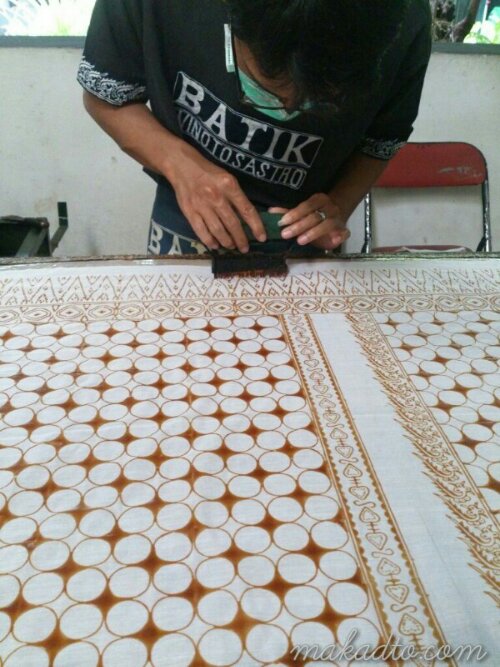
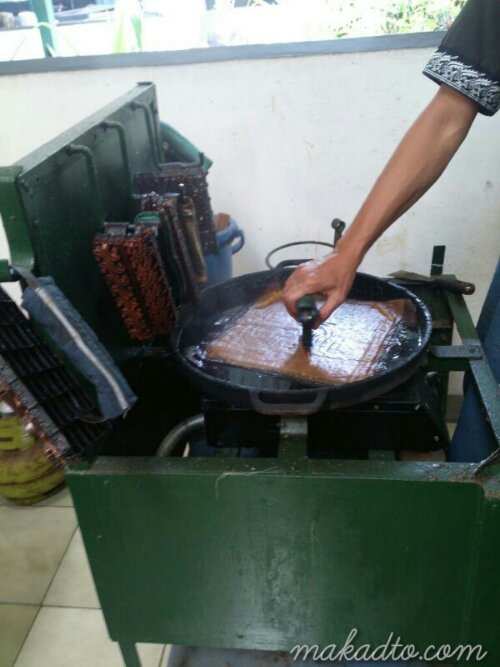
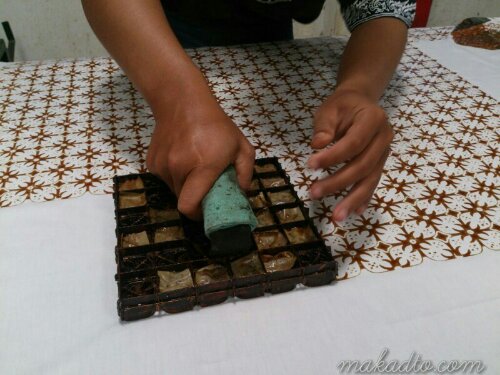
The copper block is dipped in hot wax and stamped into the fabric carefully. The sizes of the blocks vary like there’s a small rectangular one below for the border.
image

image

And this one’s a square block to cover large areas like the center of the round table cloth. 
image

image

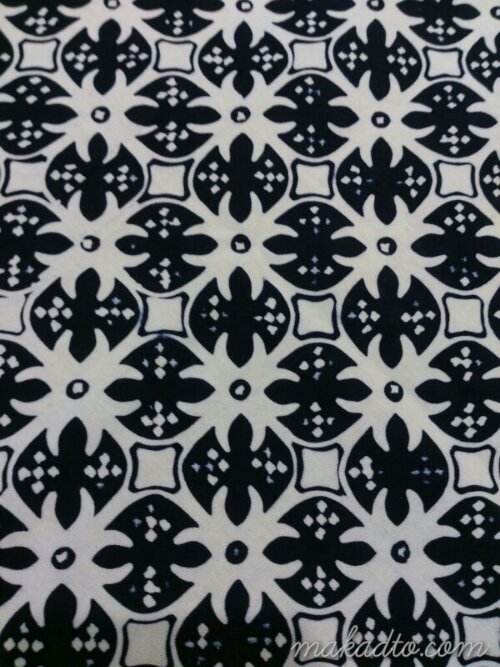
The above pattern in brownish wax will be the white area when the round table cloth is dyed in indigo.
image

Javanese Batik: Hand Painted Ones

A hand painted batik motif (batik tulis) will take about three months to finish. Longer than those stamped ones (though still by hand).

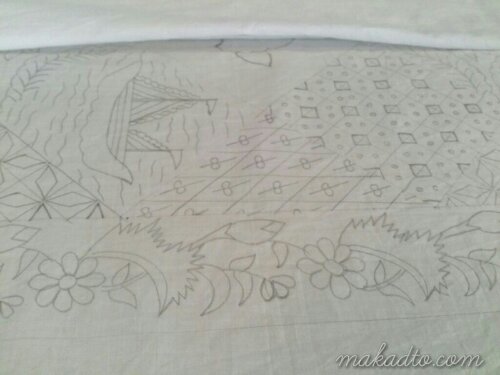
Motifs are hand-drawn in white fabric.
image

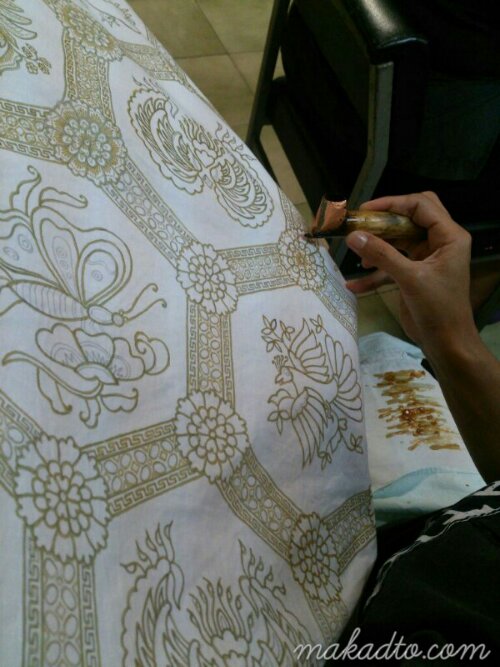
Then, waxing those parts that will remain white or will be in different color using that pen like tiny tool with metal cup and spout for the wax.
image

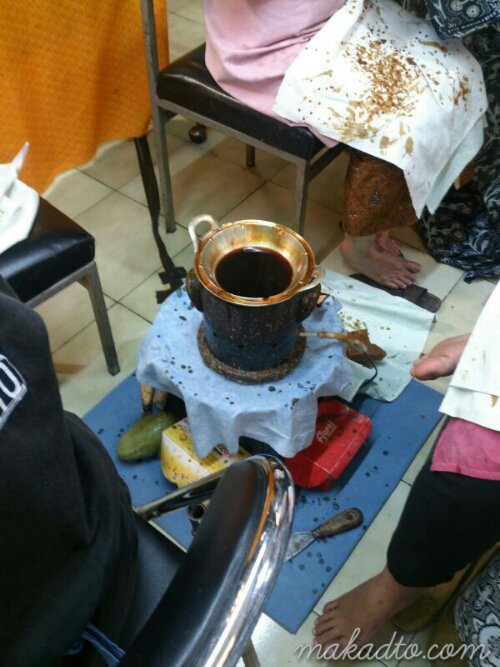
At the center is the wax in copper container used by the craftswomen.
image

After dyeing in blue (dark blue/indigo), those white ones have remained white because the patterns were covered in wax. Wax was removed by means of boiling water.
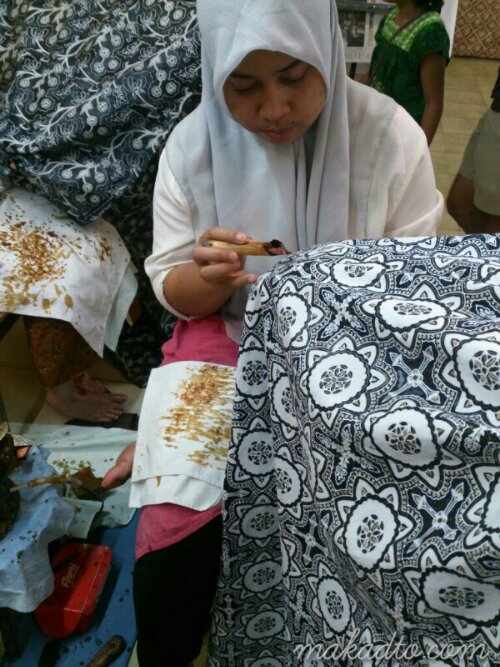
image

Waxing those blue area that will remain blue and white area that will remain white when cloth is dyed in brown color (or in any other color).  Blue and brown are natural dyes that came from plants and also the traditional colors of Javanese batik.
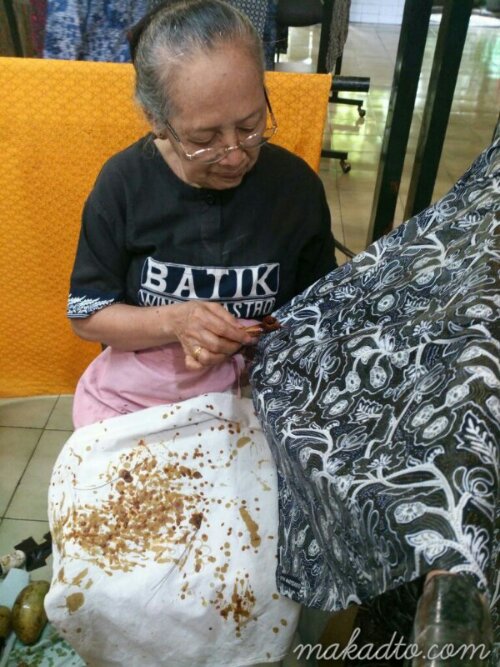
image

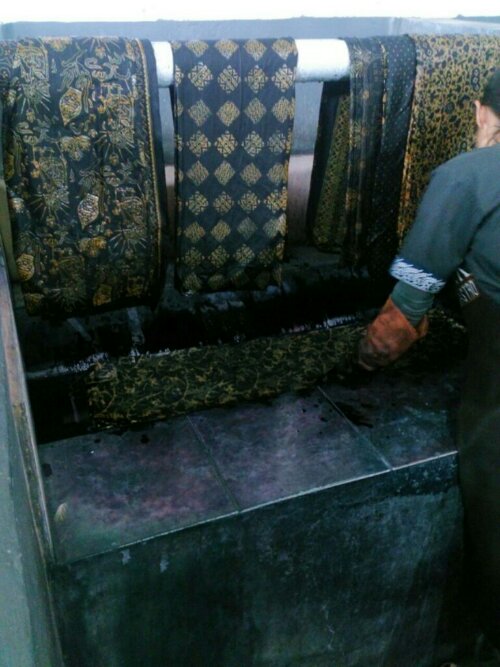
Dyeing area.
image

To remove all the wax, boiling water is used on the fabric. To remove some of the wax (for selective dyeing on various sections of the fabric), manual scraping is done by hand.

Waxing, dyeing, drying, scraping/boiling water, then repeat until desired color combination is accomplished. The end product is the beautiful batik fabric.
Buddhist Monument

An ancient Buddhist edifice, a structure more beautiful than any of the tall and grand buildings of 20th century but I’m biased for my affinity for ancient, experience-rich and wabi-sabied objects.
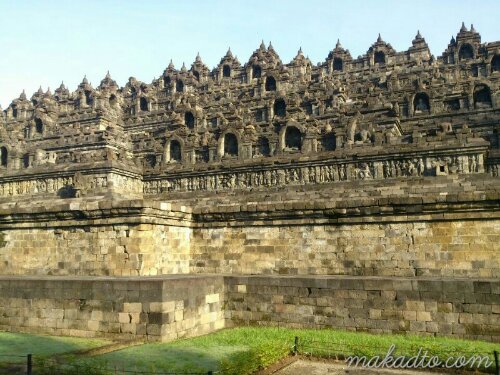
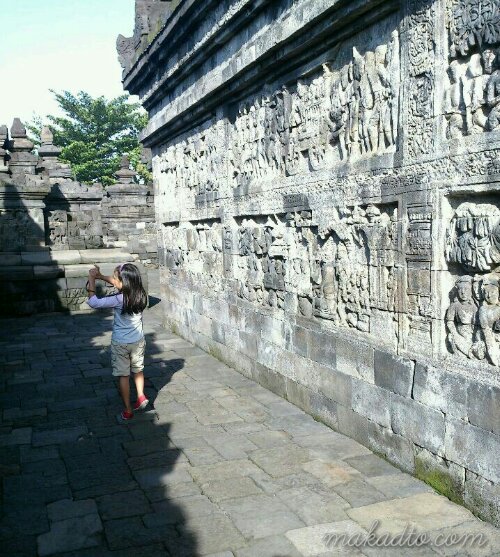
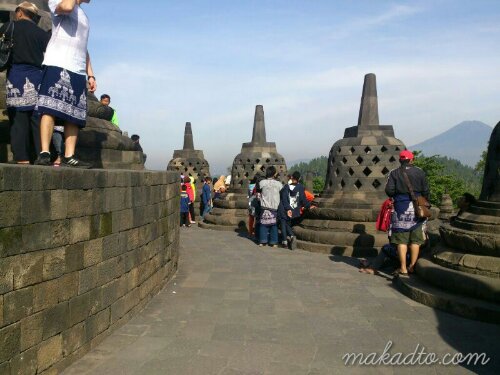
This grand Buddhist monument is the Borobudur Temple, a UNESCO World Heritage Site.
image

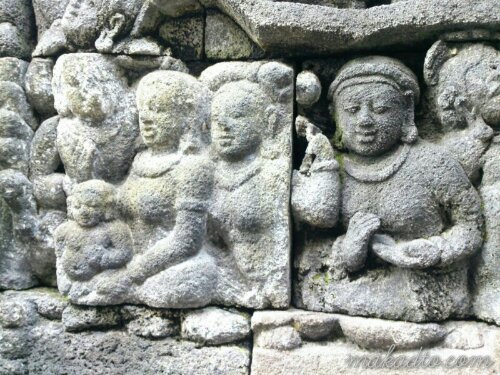
And there are thousands of relief panels within, it was like solving jigsaw puzzle during restoration for the stories to be in sequence and where every block of volcanic rock must interlock.
image

A closer look of the relief panel.
image

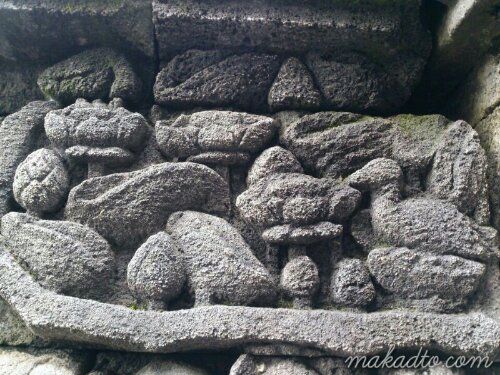
I found a duck in one.
image

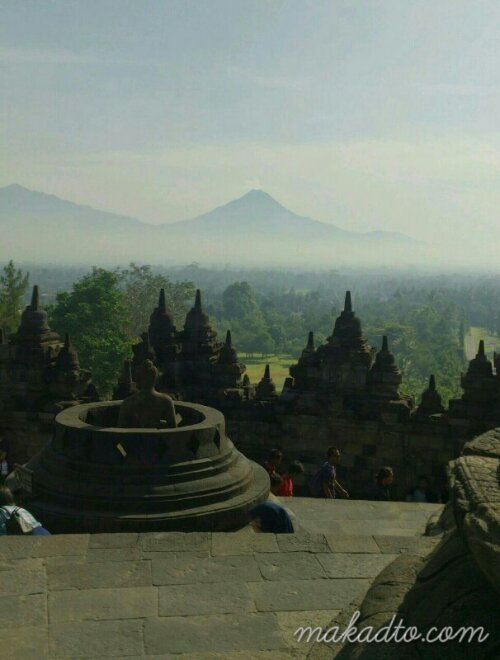
From the temple, one can clearly see the most active Mt Merapi volcano out there.
image

Stupas at the top of the edifice, the most iconic structure within the monument but I like the relief panels more.
image

There were quite a number of local tourists too and they really seem to enjoy the beauty of their heritage as much as foreign visitors who were in awe. As you can see, the batik wrap-around is required for all visitors except for children maybe.

Boat Cart

Belinjo / Melinjo

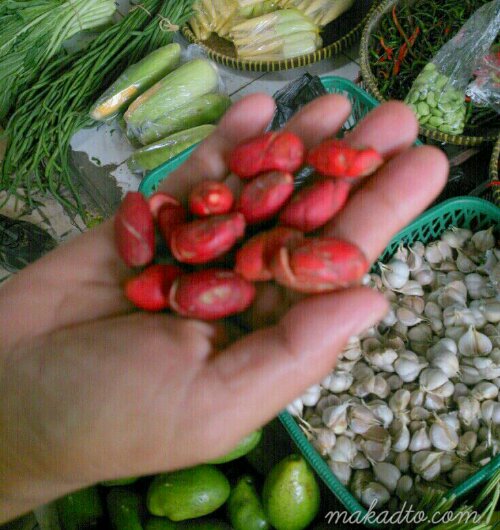
I’ve been seeing a lot of this tiny red fruit at the Prawirotaman market the first time I was there so the next time I went there with an English speaking Indonesian cook, I asked her for the name.

Belinjo says the cook while showing several fruits in her hand.
image

Here’s a closer look at the fruit and its nut inside.
image

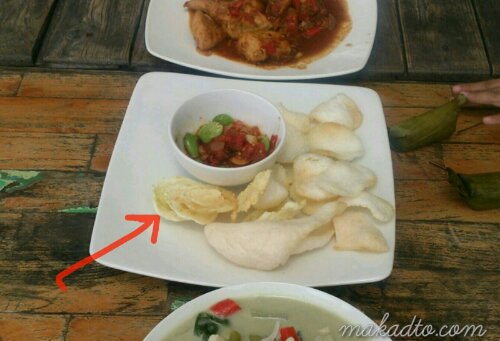
Belinjo nut can be made into a krupuk when roasted, peeled and pounded manually. Krupuk is a standard side dish in Indonesia with several variations and this is one of those.
image

Garlic krupuk, shrimp krupuk and belinjo krupuk (pointed by the red arrow) with sambal as accompaniment to the lunch meal we prepared.
image

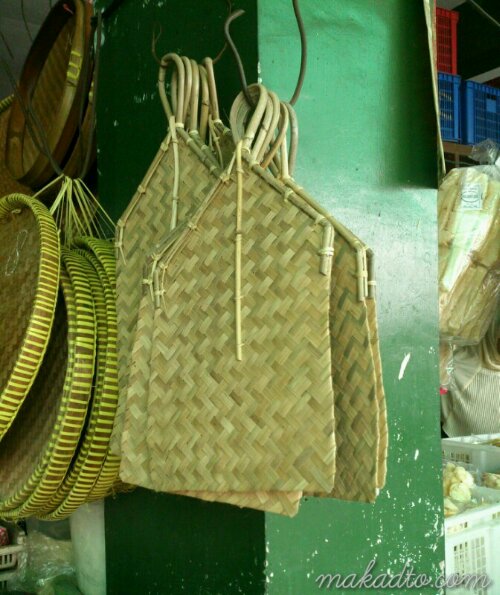
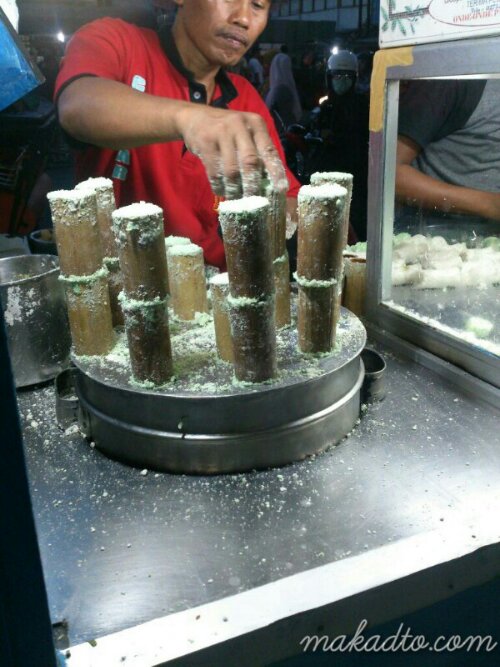
Sate Bamboo Fan

Salak / Snake Fruit

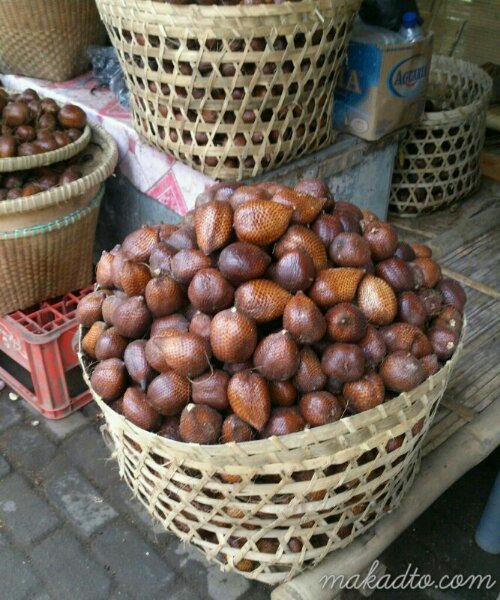
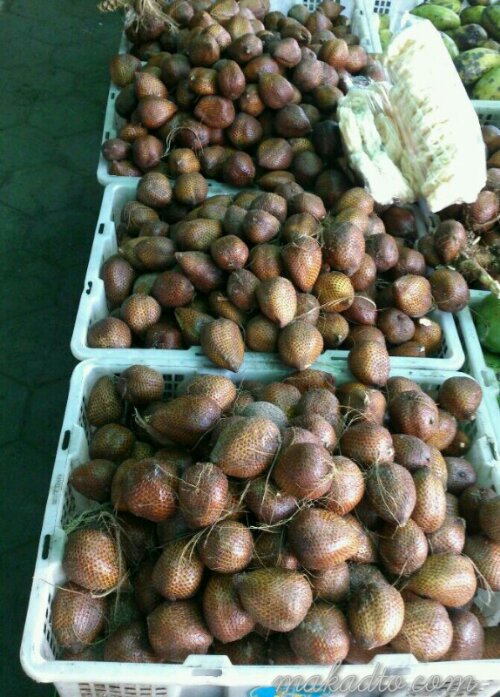
I’ve seen this palm fruit all over Yogyakarta, also in Magelang. Seems all over in Central Java.
image

image

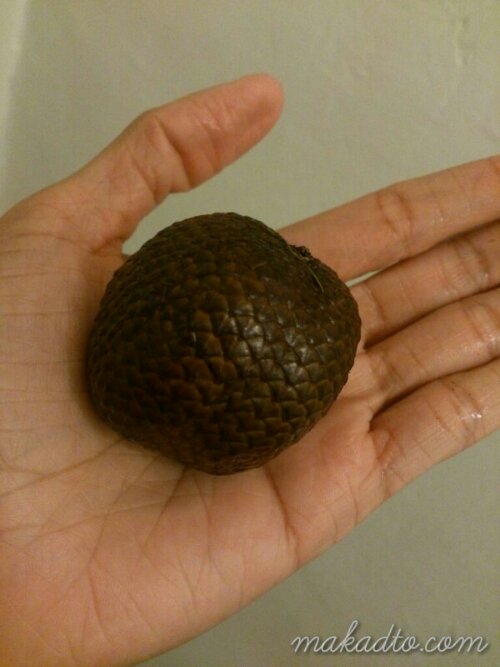
The skin is akin to that of a snake.
image

Peeled salak. Crunchy, sweet and sour.
image

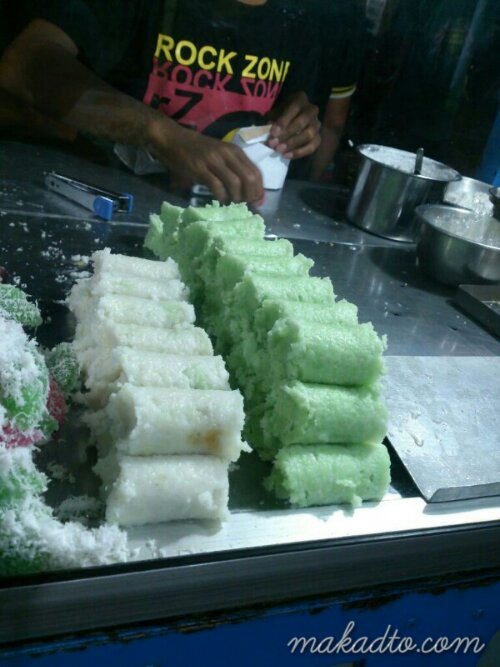
Lemper

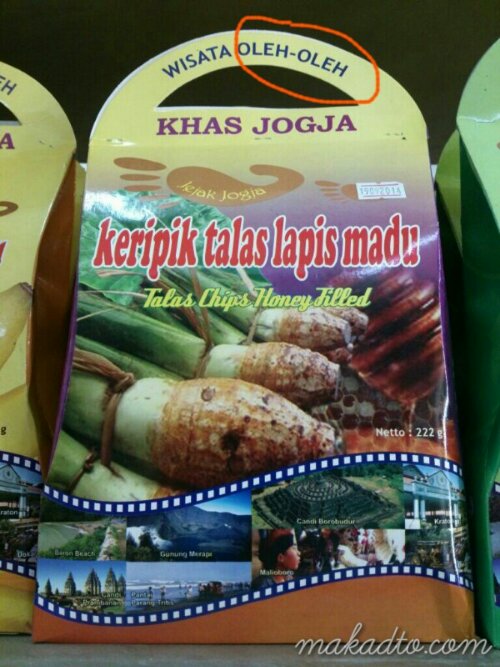
Oleh-Oleh

The concept of pasalubong isn’t unique to Filipinos. It’s an Indonesian habit too and one can’t fail to notice that at Yogyakarta airport from their baggages and even as I queued at Dunkin Donuts to buy 2 pieces for my kid. Locals would order several dozens but instead of having it boxed by dozens, each doughnut was placed in paper bag, that’s about 36 tiny paper bags for the guy in front of me. Presumably those were for his work colleagues in Jakarta or maybe for his relatives and friends in Surabaya or Bali. Wherever his destination may be, he was leaving Yogyakarta with his oleh-oleh in the form of hand-carried 36 paper bags of Dunkin Donuts.

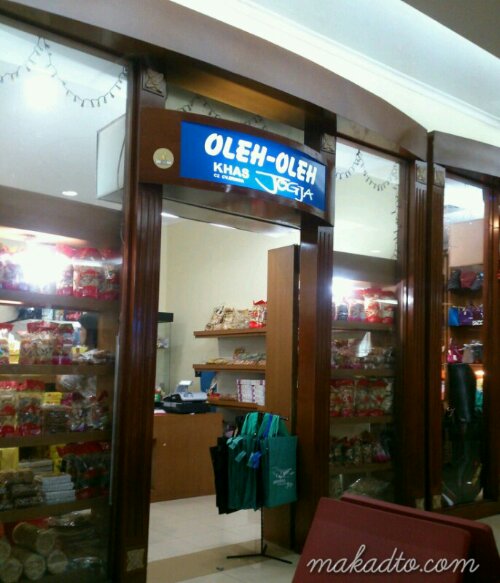
A place for last minute oleh-oleh shopping such as bakpia in Yogyakarta airport.
image

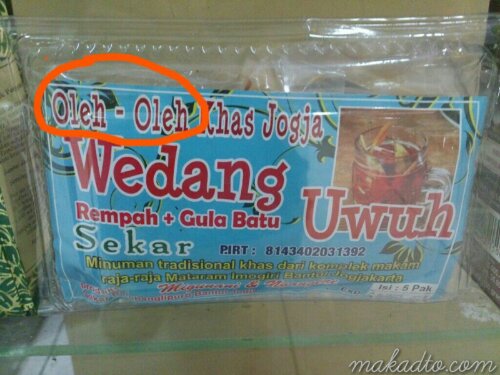
Oleh-oleh pertains to food/beverage only, that’s the difference between the term oleh-oleh and pasalubong.
image

image

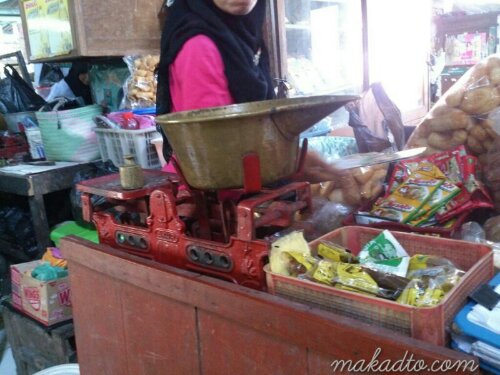
Timbangan in Java

They call it timbangan in Bahasa Indonesia just like in Tagalog.

image

Weighing half kilo of salak (snake fruit) at the fruit stall near Borobudur temple in Central Java.

image

The 500 gram weight for the salak.
image

Mostly I see timbangan in red.
image

Here’s a blue one at a snake fruit stall in Malioboro street.
image

Various weights on the table for the scale.
image

Weighing chili peppers, the main ingredient in lots of Javanese dishes and of course the sambal too.
image

Weighing lettuce.
image

Timbangan for the dressed chickens at the market in Prawirotaman street.
image

Puthu

New Year Horns

Underground Art

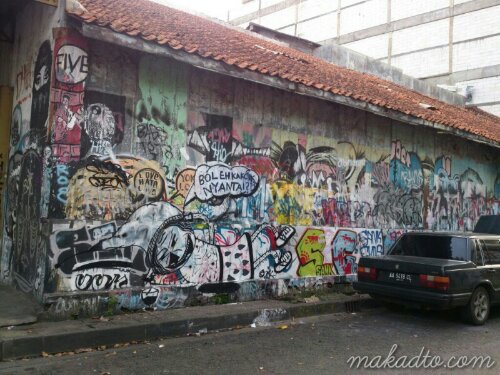
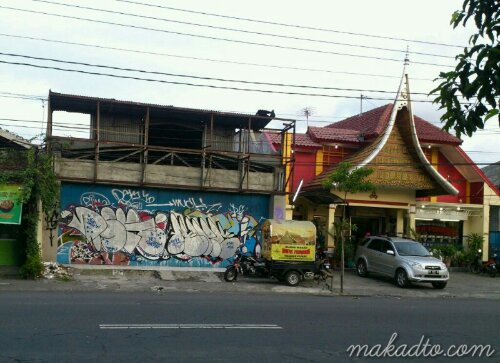
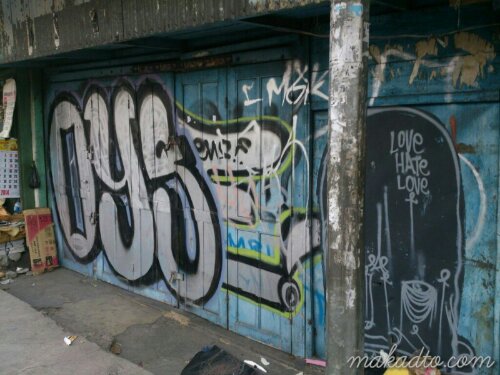
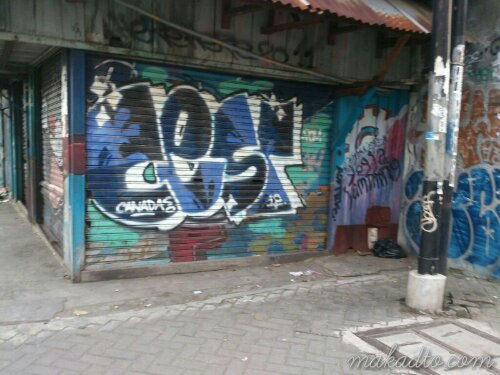
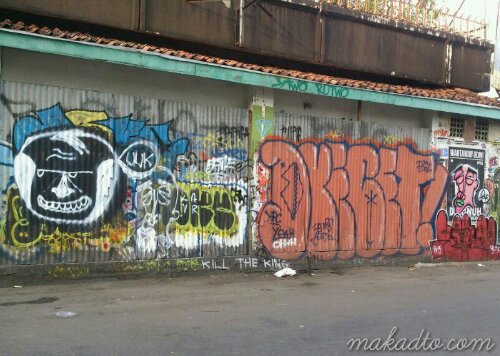
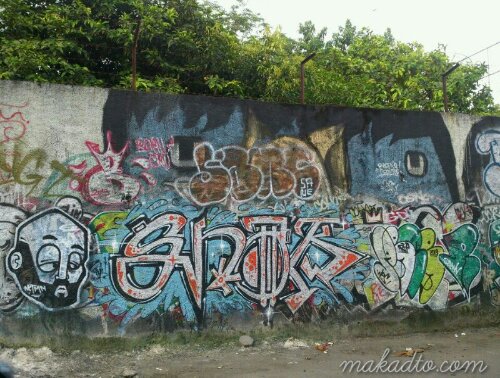
Walking around Jogja one can notice the prevalence of graffiti everywhere.
image

image

image

image

image

image

image

Wall art even in this place where I took Javanese cooking lessons (and that explains the apron).
image