Category Archives: Japan

Fujisan Trek: At 3776 Meters

image

Sitting at Mount Fuji’s summit

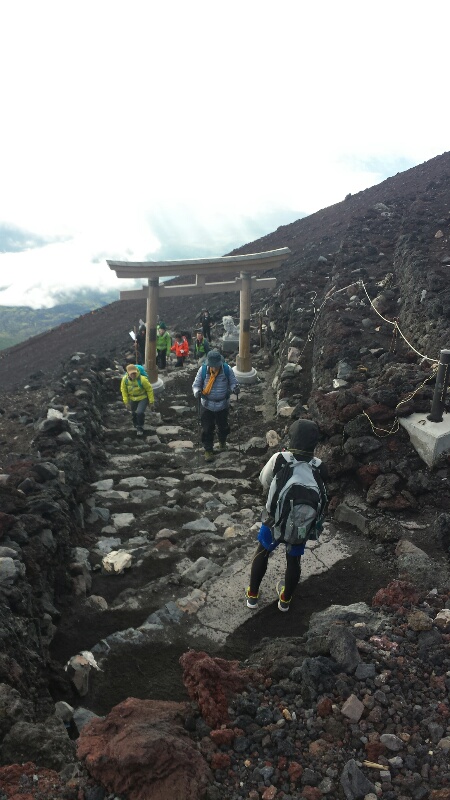
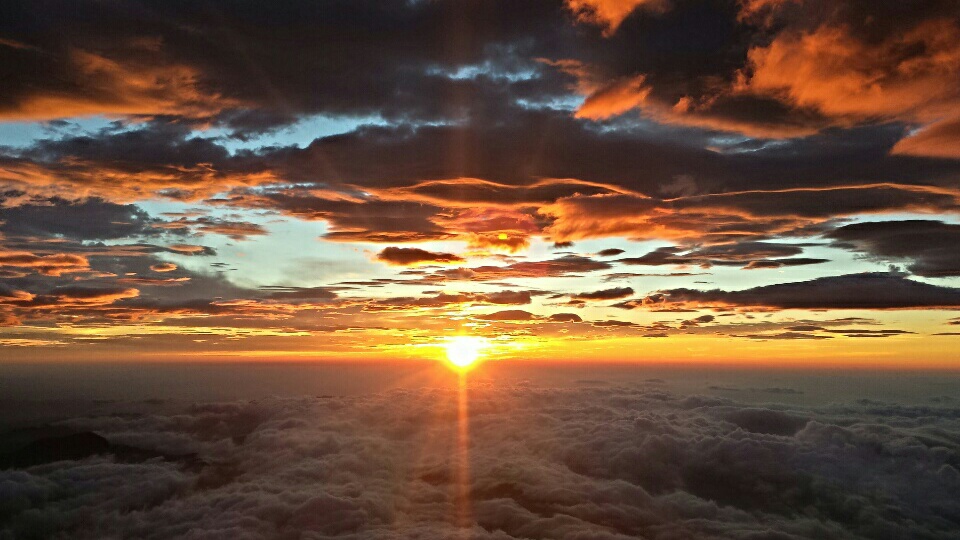
Our very slow dark hike from the 9th station hut towards Mount Fuji summit started around 2:30 AM, more than enough time to be there just before sunrise. It was slow-moving because of the long single file of hundreds (perhaps thousands) of hikers going up. A modern pilgrimage of sun-worshippers. The slowness didn’t bother me, in fact it was truly an experience to witness so many Japanese people climbing the mountain they consider sacred, and then to wait patiently in the cold for the sunrise – their goal.

image

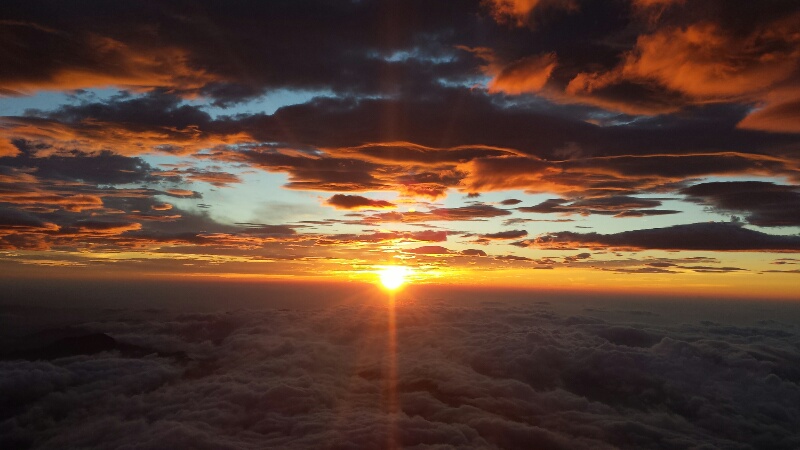
Japan’s rising sun

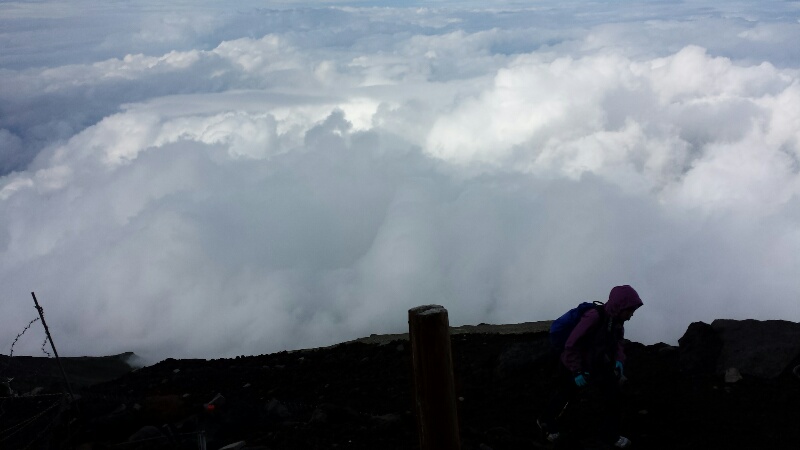
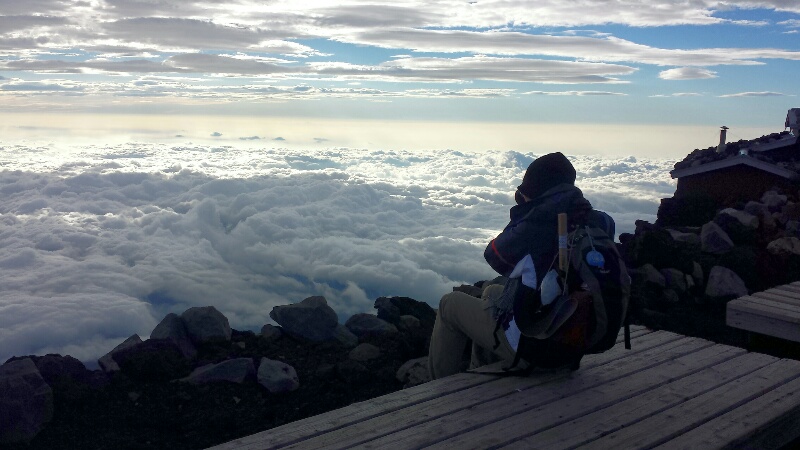
After the heartfelt rising of the sun moment, one can walk around and see very clearly at daylight the crater of this active volcano, plus the heavenly ‘above the clouds’ view at 3,776 meter altitude. Ha! I’ll never forget Mount Fuji’s altitude number because one shop in Kawaguchiko sells this Mount Fuji t-shirt with 3776 visibly printed in front, though it’s not because of this, the fact that it cost 3,776 yen stamped the number on my mind like the stamping of climbing sticks.

image

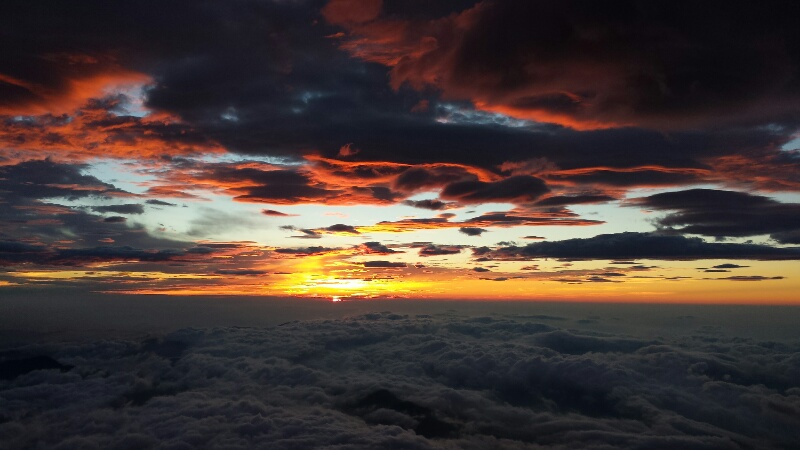
Suspense before the sunrise

image

Sun worshippers

image

Plenty of hikers

image

Where one can buy hot beverage while waiting for the sunrise

image

Vending machine at the summit — only in Japan

image

Shelter at the summit where one can sit to defrost but you must buy hot meal such as curry rice or ramen

image

Beyond those ropes in the crater of Mount Fuji

image

Another snapshot of the crater yonder

image

Torii gate just before entering the temple at the summit

image

Having my stick (1/3 size of the climbing stick) stamped at the temple in the summit for sentimental purposes

Fujisan Trek: Ascending Trail

image

Wide trail at the start. Can be shared with horses

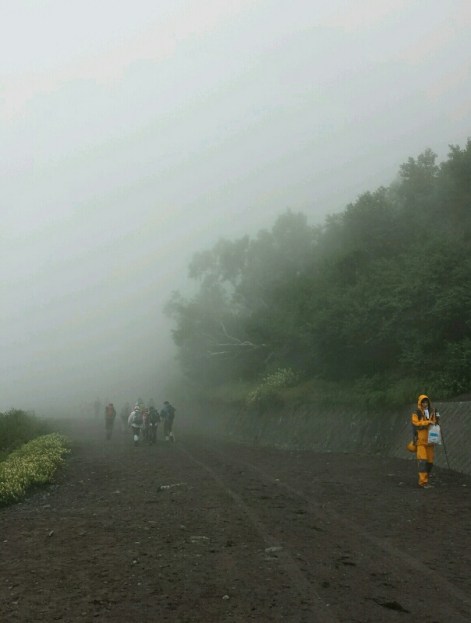
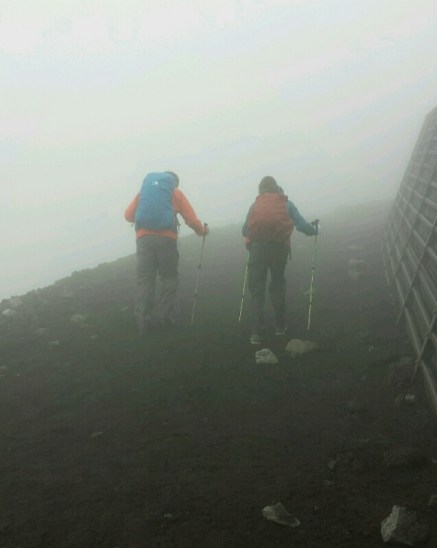
It was a foggy Friday past noon in the ascending Yoshida trail with temperatures ranging between 10°C and 15°C and where it rained in some parts.  The hike was rather pleasant and easy. Uphill is usually undemanding for me. My backpack was small, the one used for adventure racing with just enough space for a 1.5L hydration bladder and change of clothes. I could even run up on the trail but don’t want to spoil the beauty of mountain hiking where one can take in more of the surroundings when going up (or down) than in mountain running. Running makes me focus more on my feet because of uneven terrain, else the risk of tripping when not looking down.

image

A shelter for bad weather, erosion, or eruption

Loose small rocks and volcanic sand comprised the first part of the trek from the 5th station. In one segment towards the 9th station, it was stair-like, steep and rocky. The higher you go, the windier and colder it becomes. Took 4 leisurely hours with ample time to pee expensively (200 yen) and rest in shelters along the way for high altitude acclimatization until we reached our hut at the 9th station, our pit stop for the night before continuing the next day to the summit.

image

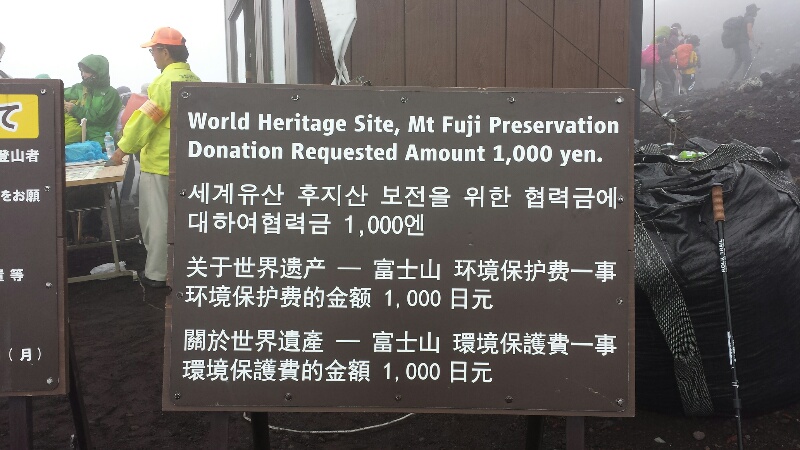
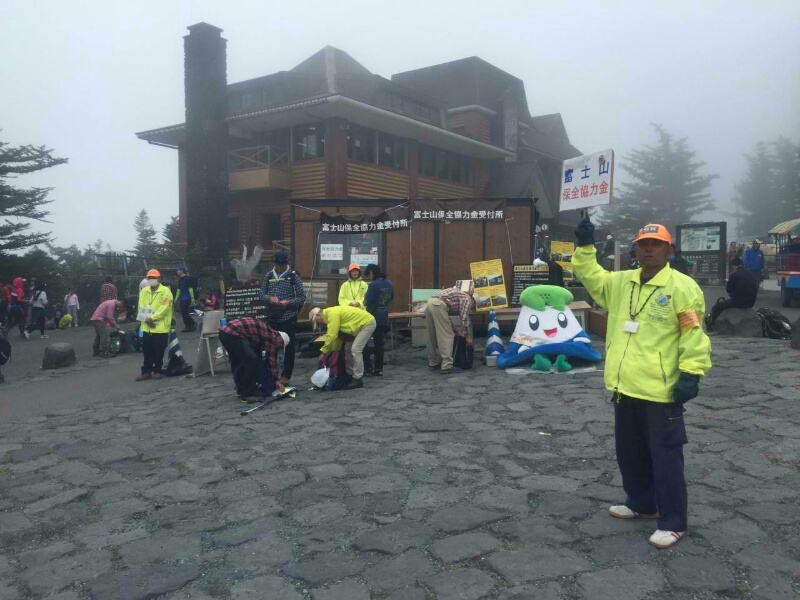
To those who haven’t ‘donated’ ¥1000 yet, there’s a donation table here at the 6th station

image

Hikers resting, some were eating. This is still early part of the hike
image

Hikers on the trail. Using trekking poles is a good idea. See the erosion barrier on the slope?

image

This plant with clusters of tiny white flowers is common in Mt Fuji

image

Not too easy for those with big packs

image

One of the huts along the trail

image

Looking up. More huts up there. Each hut somewhat serves as a hiking milestone

image

Looking down this time. See those huts and hikers below.

image

Stairway on the trail

image

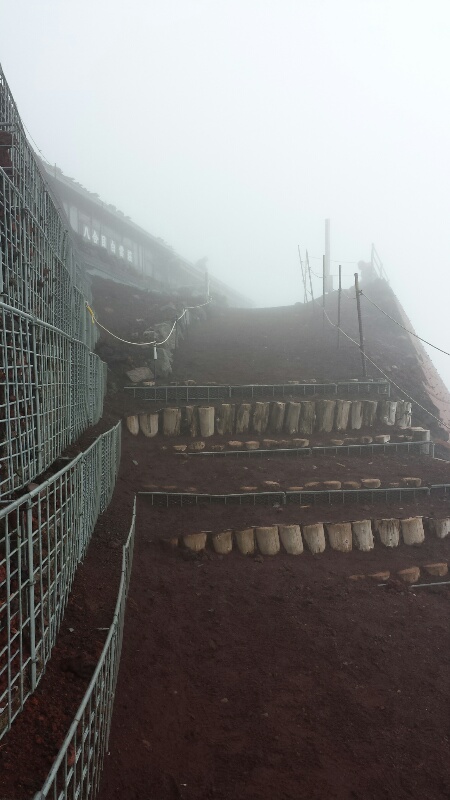
Stairway and wire mesh baskets for soil erosion protection

image

A closer look of the wire mesh baskets securing rocks and soil on the mountainside of the trail

image

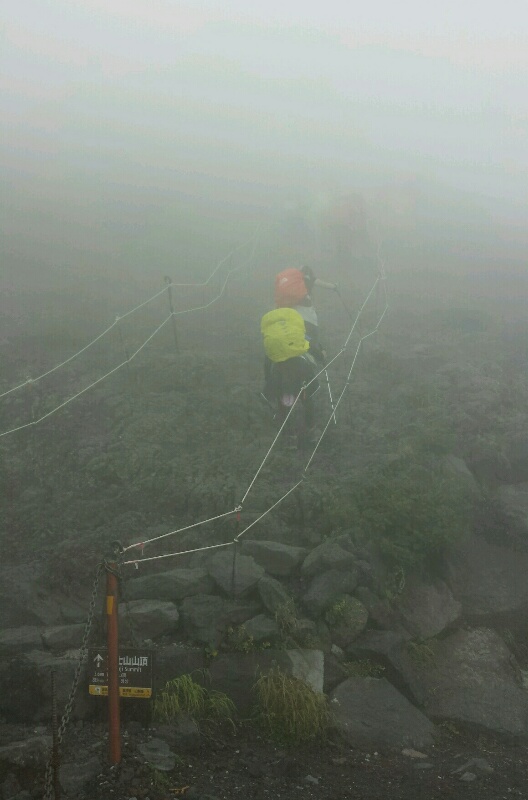
Sign pointing to Mt Fuji summit

image

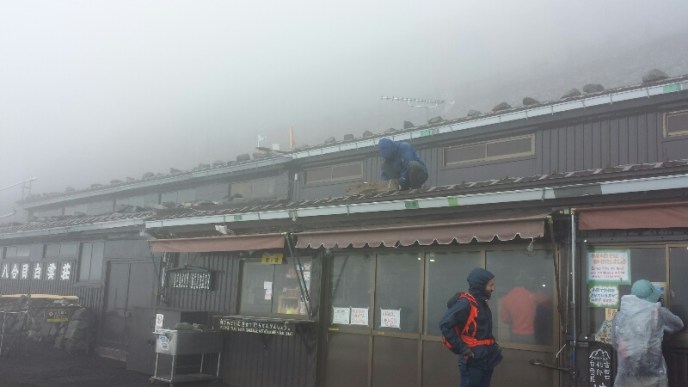
Rocks were placed on the roof of this hut to secure it from strong winds

image

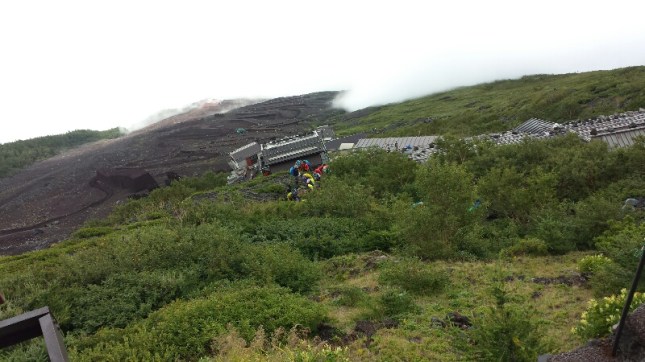
9th station at last. No more fog because we’re above the clouds
Fujisan Trek: Readying

image

Ample information provided by Japan that there’s no need to hire a guide to climb Mount Fuji

When Gerard, my classmate in high school, told me stories about his Mount Fuji hike, I was intrigued that the idea of doing it myself has been on my mind since 2013. I’d be a fool not to climb Mount Fuji.

So in this year’s climbing season I got to hike (finally) and saw Japan’s rising sun from the summit. It was incredibly brilliant, and as beautiful as the sunrise of Mount Pulag.

image

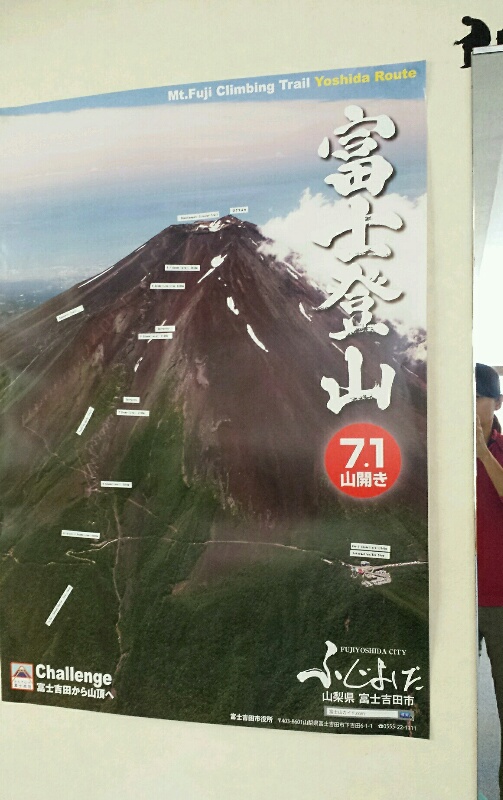
Challenge poster

Prior to the actual hike, here are some snapshots related to readying not just for me but as observed around me mostly right before the climb that commenced at the 5th Station of the Yoshida trail.

image

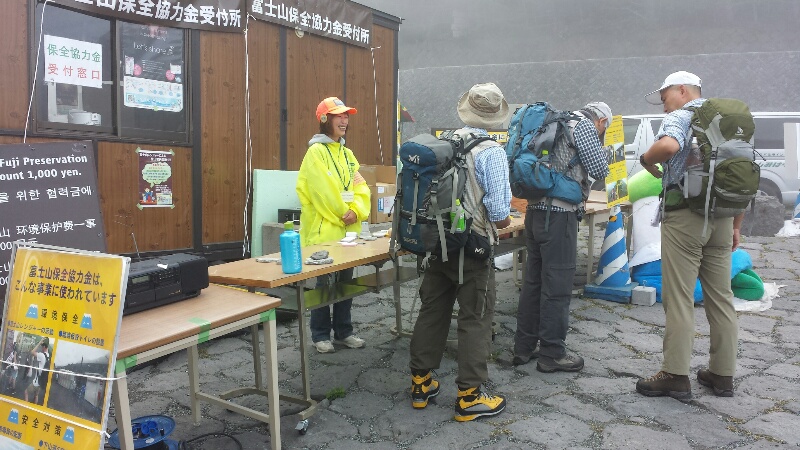
Donation of at least ¥1000 for the preservation of Mount Fuji as a UNESCO World Heritage Site

image

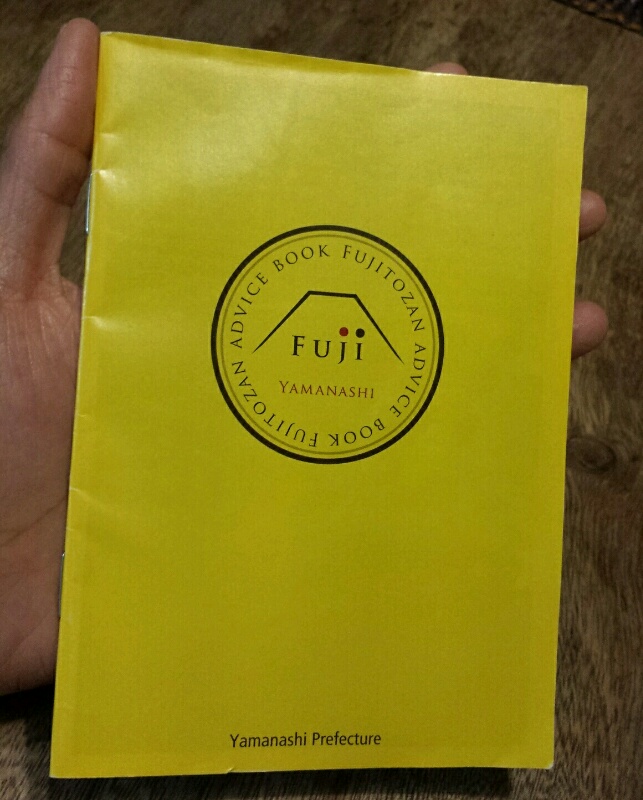
Advice book in exchange for donation. Very handy information inside. If only I got hold of this days before the climb and not on the day itself

image

No doubt we’re in Japan. See the mascot yonder?…

image

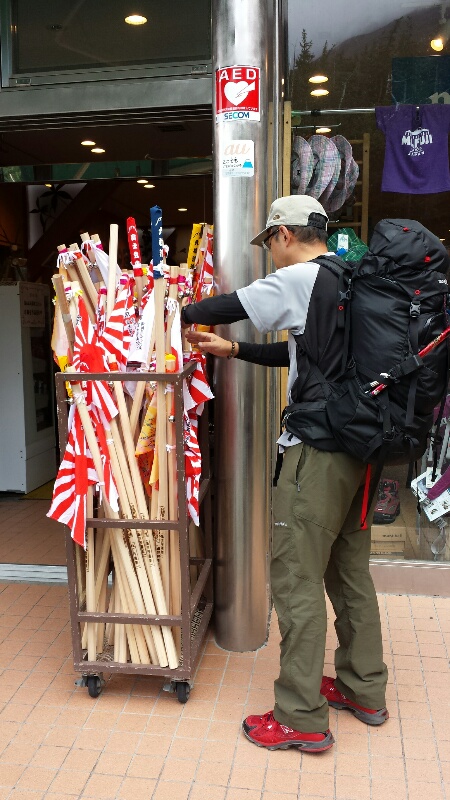
Climbing sticks

image

Soba with plenty of local summer vegetables from a restaurant at the 5th station

image

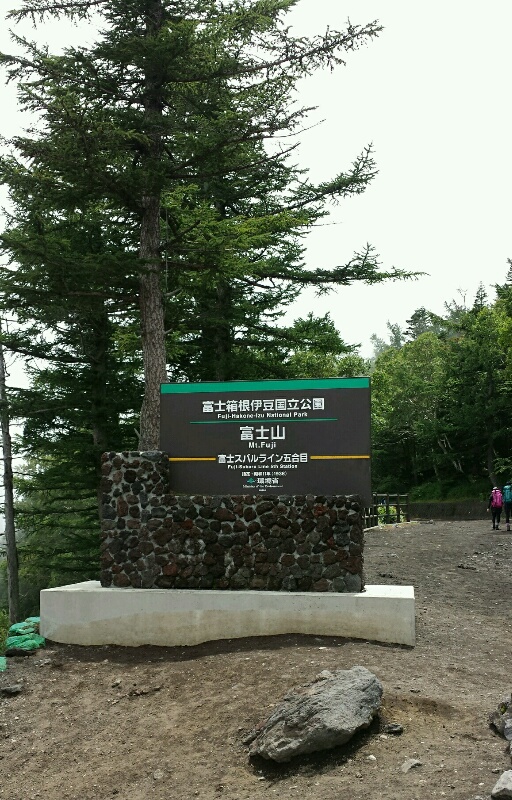
Start of the trail at the 5th station…more on Fujisan trails in future post(s)

Japan’s Tiny Toilet Bins

image

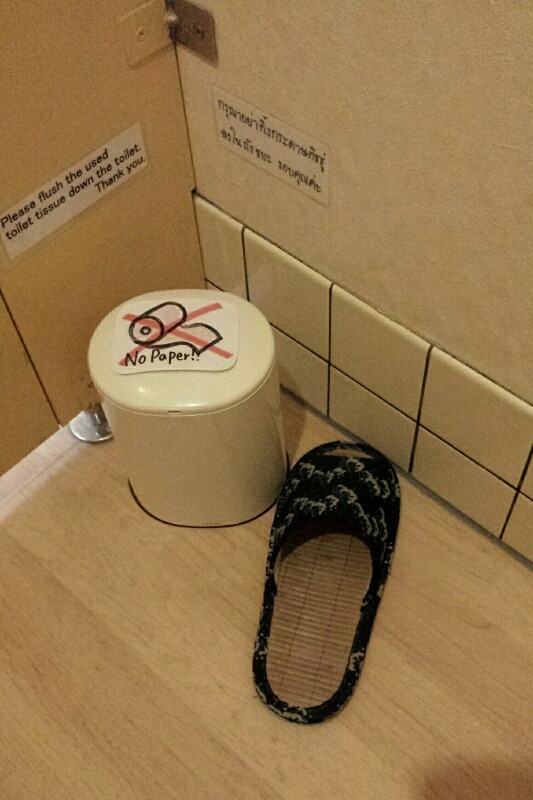
Because Japan’s toilet system has powerful flush mechanism and can break down tissue papers, therefore used tissues must be flushed, and that’s the reason why their trash bins are cute. Love this hygienic system.

image

In the Philippines, one needs to throw used tissue papers in the toilet trash bins because flushing it (lots of it) can cause clogging, hence the need for regular size trash bins. I really feel bad for those Japanese visitors in the country, especially the ladies who unintentionally found themselves in a situation where they’ve clogged the toilet bowl because of the mental model to flush the paper, then have realized too late the weak power of Philippine toilet flush.

Picture Trail Sign

image

Though I couldn’t read the written characters, it is very clear from the picture sign that one should not enter this particular trail in Mount Fuji. Pictures signs are universal, and in Japan they are widely use.

Arakurayama Jaunt

image

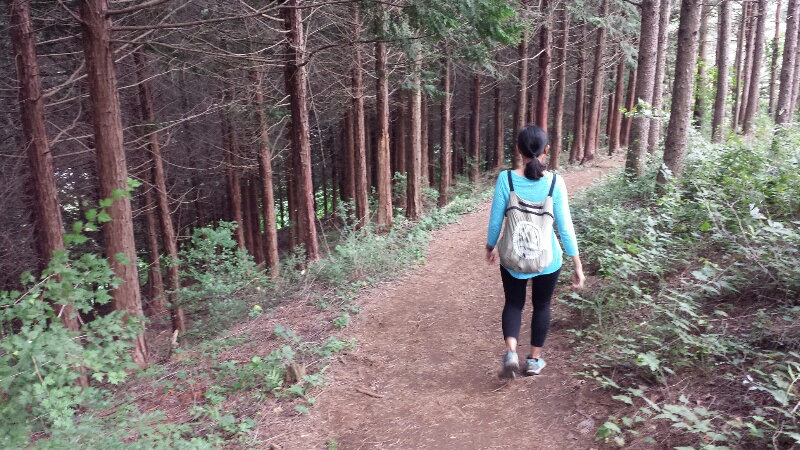
Ascending and the trail is still a bit wide from here

I was thinking that if my legs were mildly sore from the Mount Fuji trek, then perhaps a short hike to the top of Mount Arakura (Arakurayama) the following day might be soothing, plus I get to see Fujiyoshida City from above.

image

At the goten, I was on a supposed to be a good spot to have a pleasurable view of Mount Fuji from afar. But since it’s summer, Fujisan is hardly visible due to the haze, but since it’s summer then it’s a good time to climb Mount Fuji instead, which I did.

image

The top of Mount Arakura

image

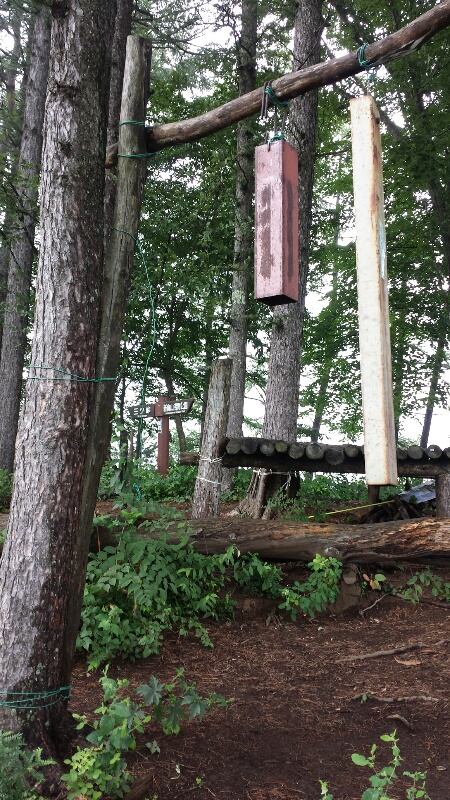
Hanging gong

image

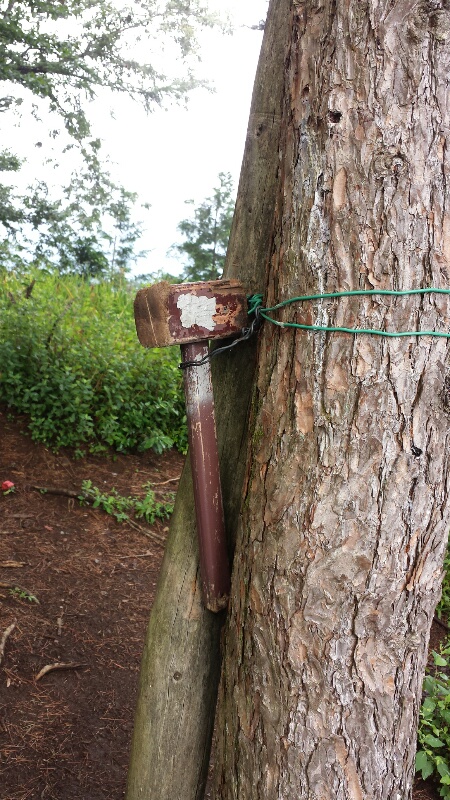
Hammer to strike the suspended gong

image

Sign at the goten (viewing spot)

image

Fujiyoshida City on a plateau as seen from the goten

image

Another view from the goten

image

Almost at the end of the descent

Lake Kawaguchi

image

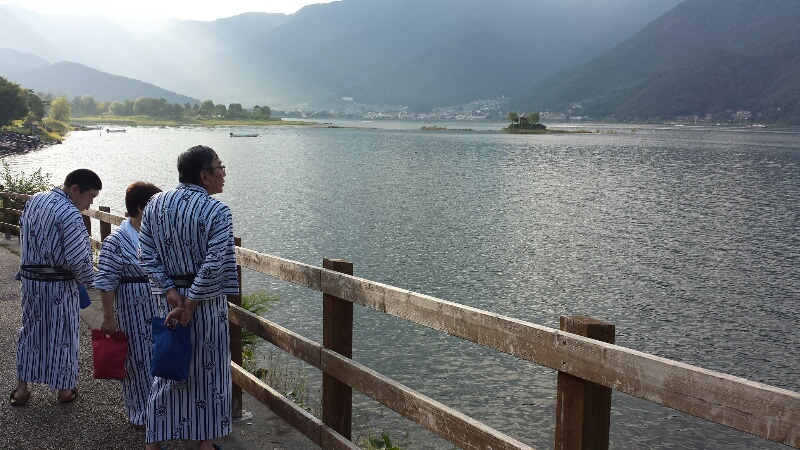
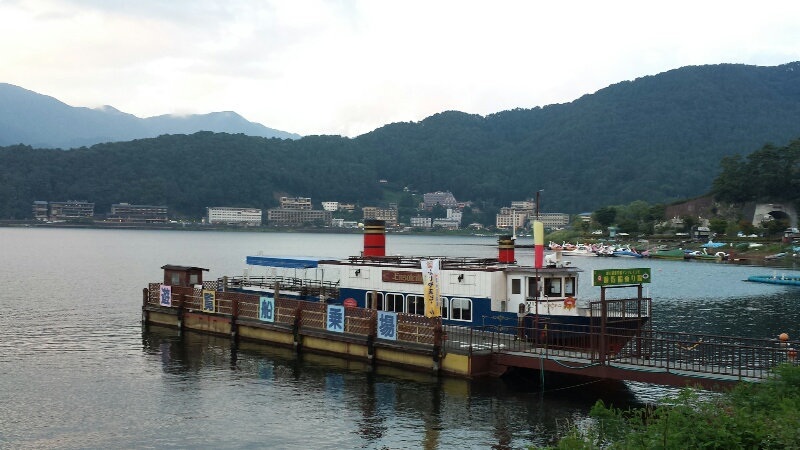
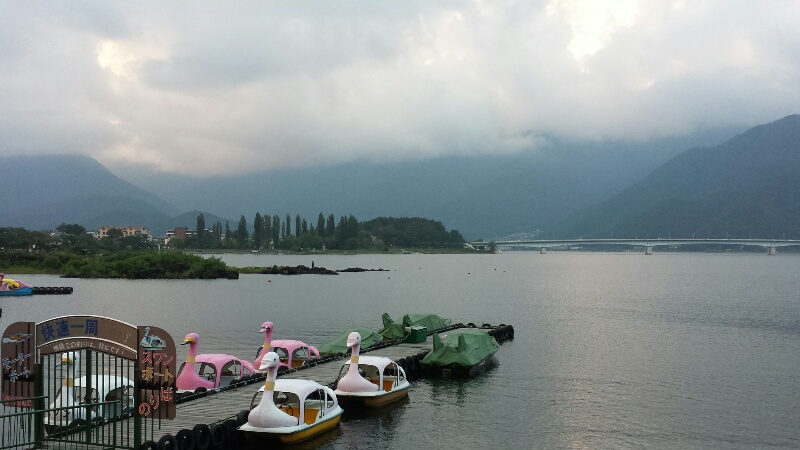
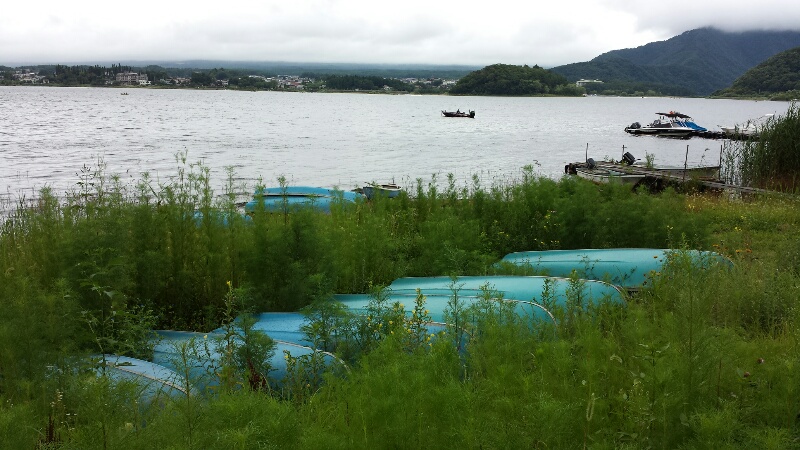
Long walks around the lake for couple of days was soothing for my mildly sore leg muscles from my Mt. Fuji trek. The path beside the lake is perfect not only for walking but for running as well, and that the scenery of the mountains surrounding the water will surely make one become unaware of the distance covered on foot. In fact, in yesterday morning’s walk I went too far that I rode a bus going back.

image

image

image

image

image

image

image

image

Hull Hues

image

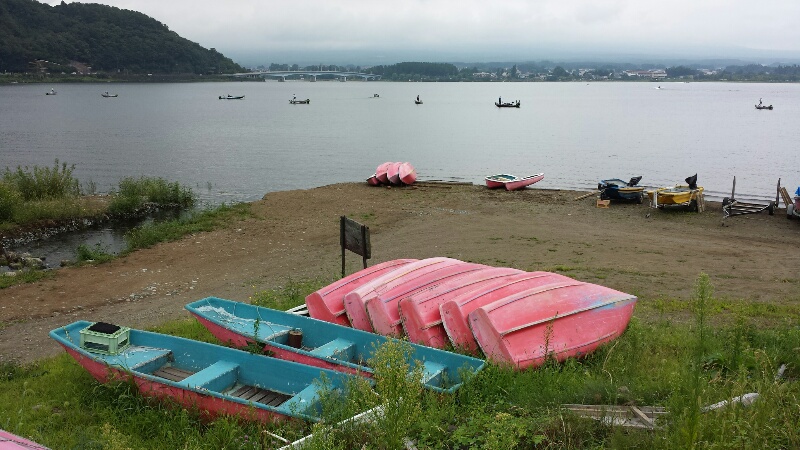
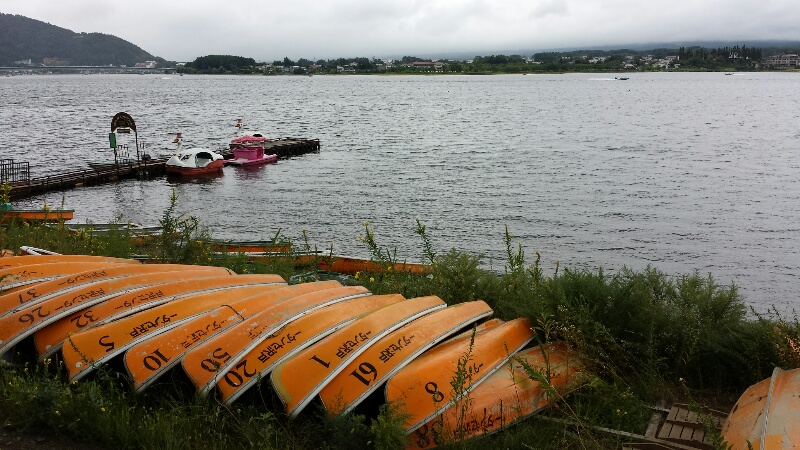
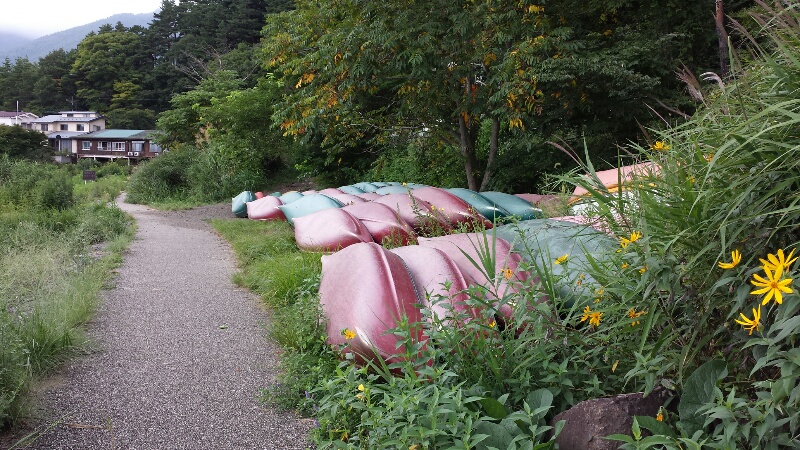
As I walk by the Kawaguchi lake, I would encounter from time to time parked boats lying in bottoms up position having uniform hull color. That wasn’t just a short walk as I’ve managed to collect four snapshots.

image

image

image

Saturday Snapshot: Goraiko

Sakura

image

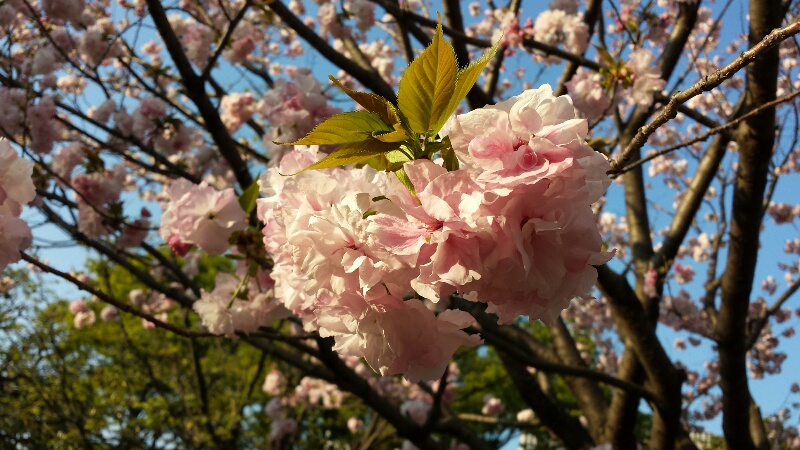
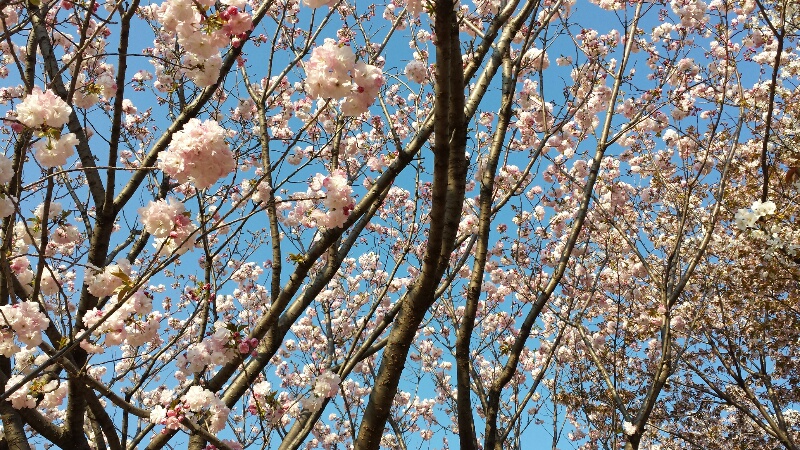
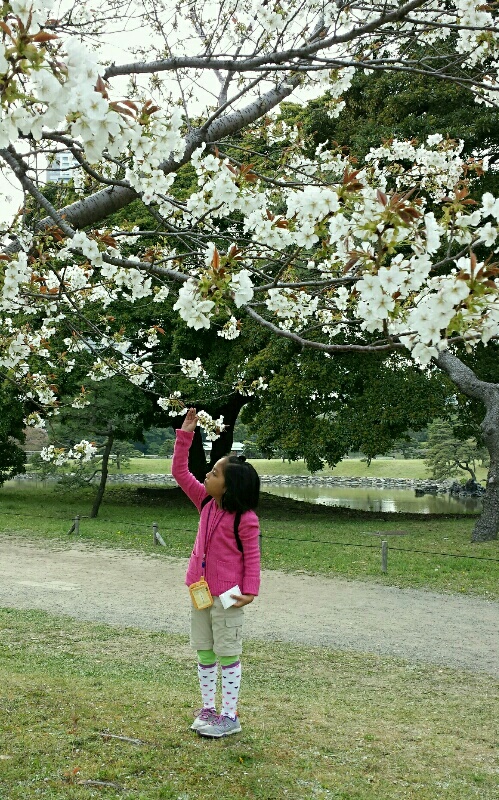
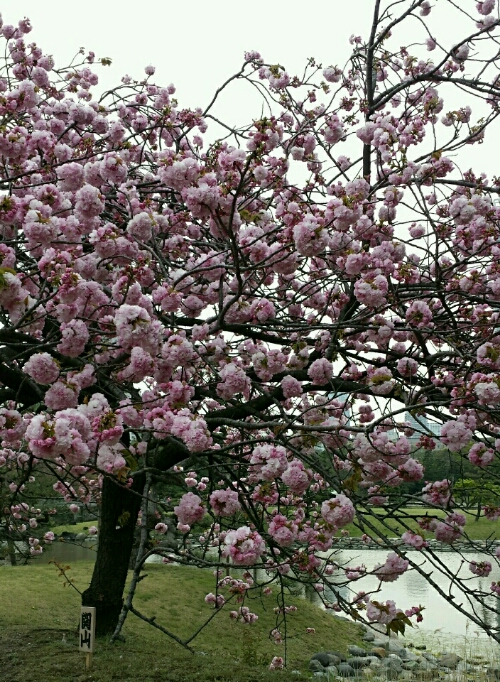
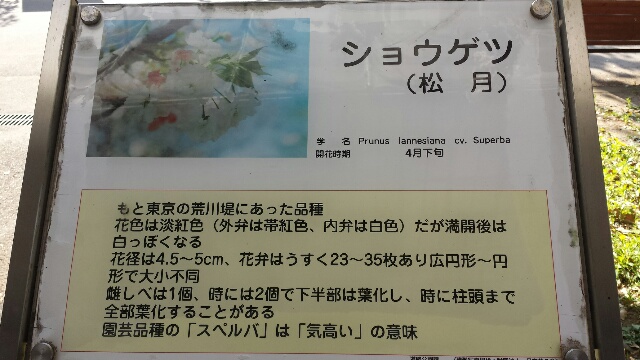
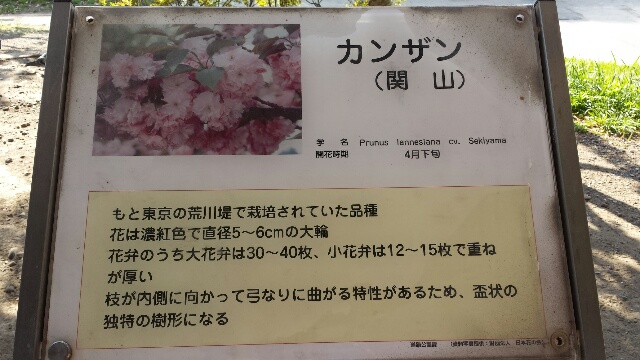
I have never heard of any other culture that give that much reverence to a certain flower, plant, or tree like how the Japanese adored the cherry trees and its blooms. Only in Japan where viewing of a certain flower is being done countrywide.  They even coined a term for it – hanami. As far as I know, viewing of cherry blossoms in certain spots of other countries was introduced, if not influenced by the Japanese.

image

Appreciation of the cherry blossoms is like a festival that entails a picnic, party or a quiet reflection of its positive symbolic meaning. Only in Japan where the blooming forecast of cherry trees is a major news item. That is how much they look forward to its annual beauty, and for it to be short-lived makes the level of anticipation very high. Moreover, their love for cherry blossoms is deep enough for it to be a constant subject in poetry, arts, food, and in almost every aspect of their lives. They even regard it as valuable enough to be offered as gift to other nations, a national pride. With this, I can never doubt the significance of the cherry tree to them.

image

The Japanese love for their cherry blossoms spread to visitors of their country

I’m inclined to think that the Japanese are deep people. Who would have thought of planting cherry trees in great numbers at most parks, temples, and public roads as part of urban planning. The foresight to beautify the cities at spring because everybody feels so much joy viewing the cherry blossoms makes them quite a profound culture.
image

image

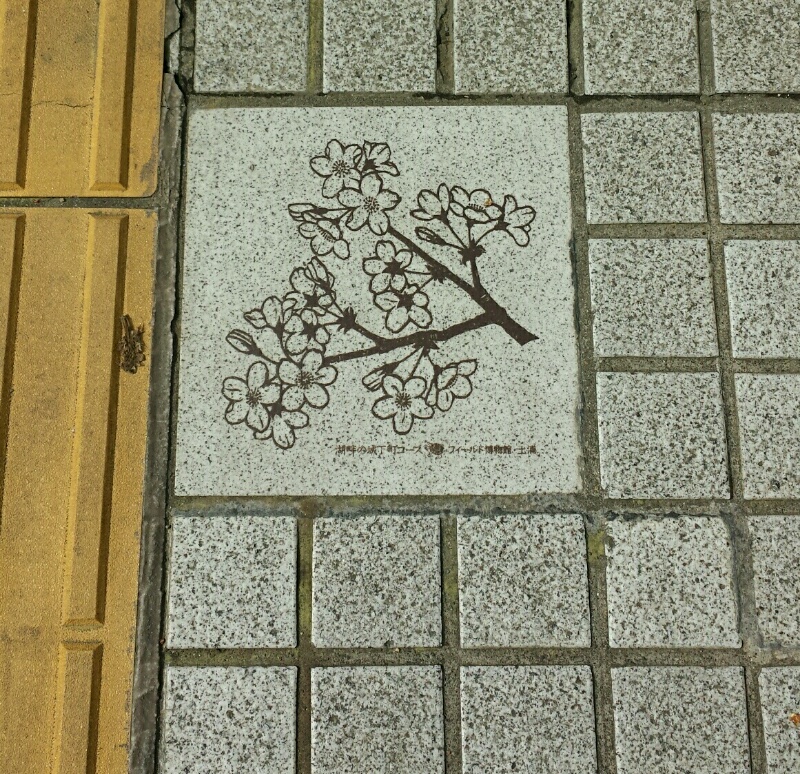
Cherry blossoms on a sidewalk floor tile in Tsuchiura


image

One of the roadside poster stand on cherry tree varieties

image

Another cherry tree variety in this stand

image

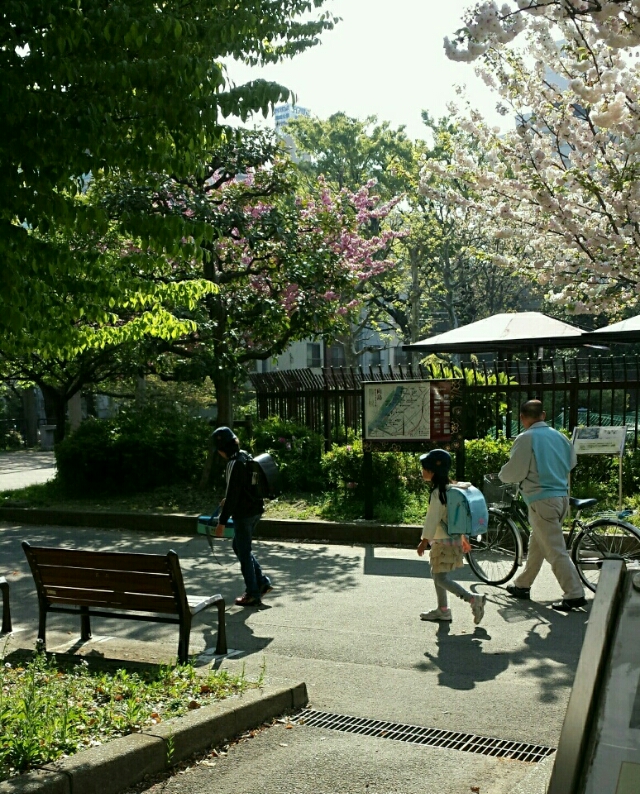
Outside this school in Taito-ko was where I spotted those cherry tree poster stands during my morning run

Japanese How-Tos

image

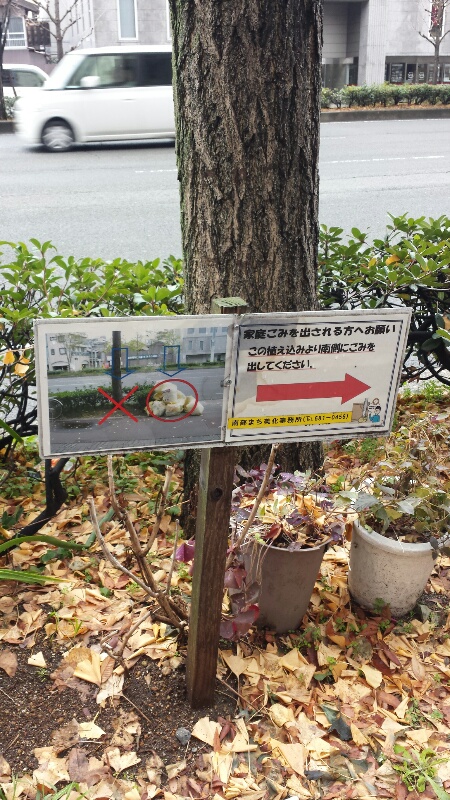
One thing I admire about the Japanese is how easy it is to figure-out their illustrative instructions or specifications. When they illustrate something using figures, symbols, or images, words become unnecessary. This is why, for most Japanese products, figuring out how to assemble toys or opening a packaging the right way, is relatively easy by just following their illustrative instructions – even if one cannot read hiragana, katakana or kanji.

I’ve worked on Japanese projects for 3 years with no knowledge of their language. This limitation didn’t prevent me from creating reporting solutions with layout and data in accordance to their specification which was in the form of matrix and symbols. An indication of how good they were able to illustrate the details of the specs without the need for lengthy narrative. From my years of experience in information technology industry, I think Japanese specs are truly superior.

Even in non-complex uses, here is a clever instruction in Kyoto of how to properly leave garbage bags during designated yellow garbage bag collection days. A photograph of the exact spot including the tree, plus few symbols, you’ll then have a simple yet effectively clear instruction on where not to put the yellow garbage bags.

Snow Country Measures

image

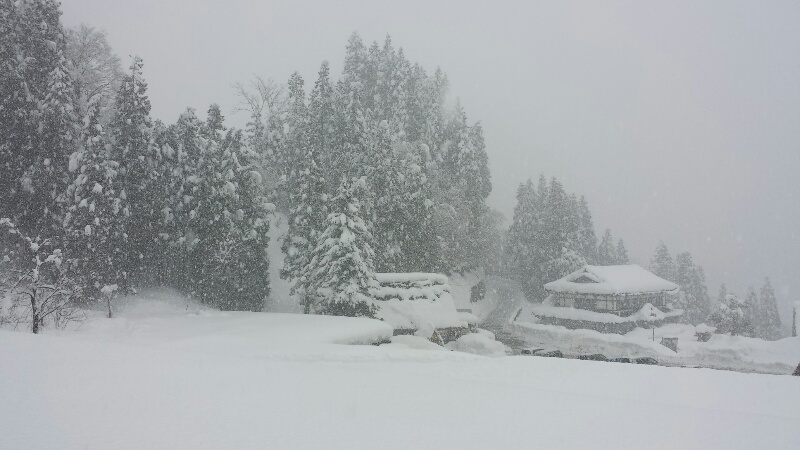
Life in the snow country of Japan

image

Constant manual removal of snow from the rooftops

image

Shoveling snow into the snow gutter (beside the lady)

image

Plastic shovel for fluffy fresh snow while metal shovel for hard old snow

image

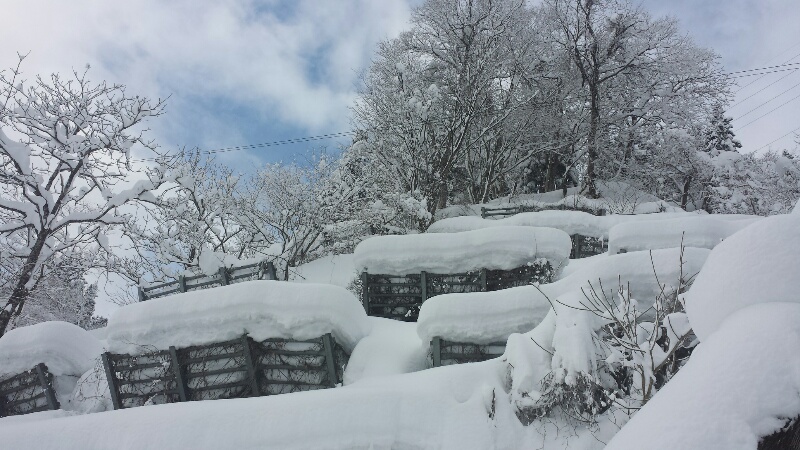
Avalanche barriers

image

More roadside avalanche barriers

image

Like an irrigation system but its purpose is to de-ice this parking lot

image

Roadside waterways for depositing and de-icing while shoveling snow. The waterways will then be used for rice paddy irrigation

image

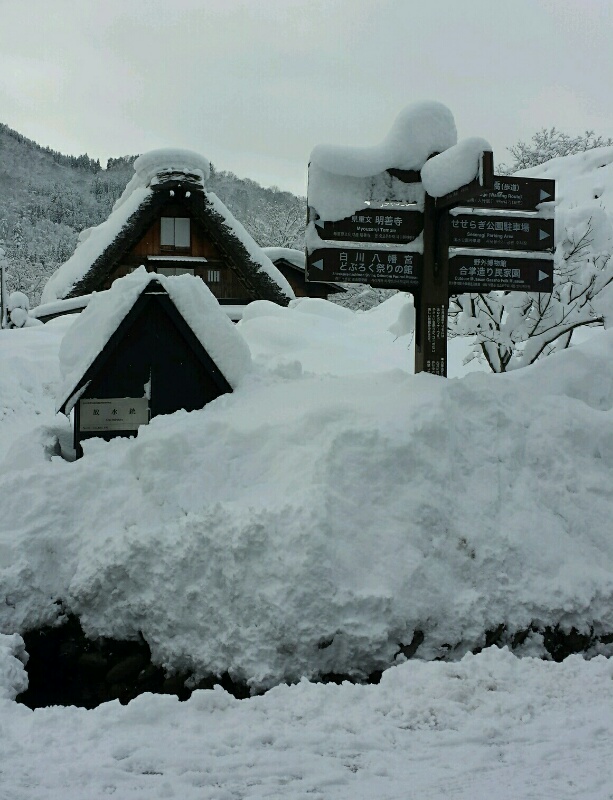
Houses with triangular roof so that the snow can easily slide off. Triangular roof also prevents thick accumulation of snow

image

Man using snow scoop in Shirakawa-go

Japan Running

image

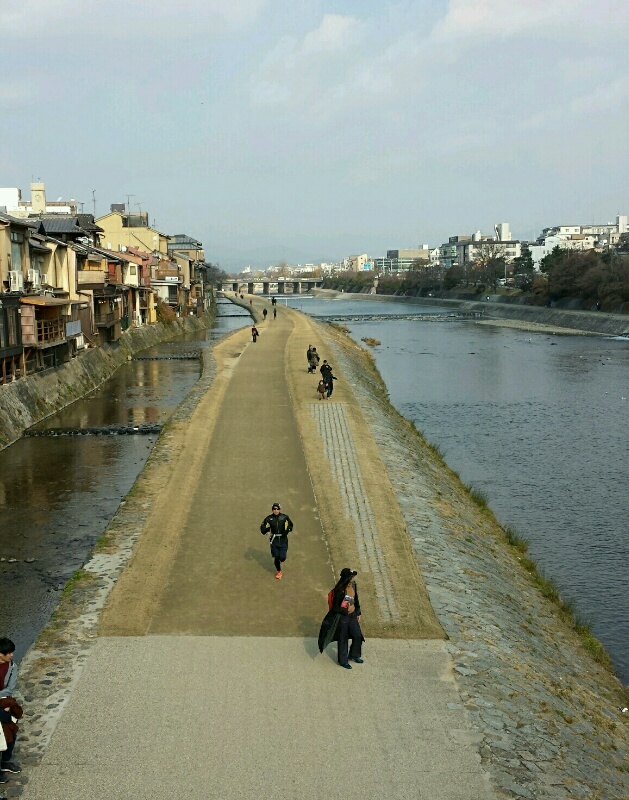
Runner by the river at wintertime in Kyoto

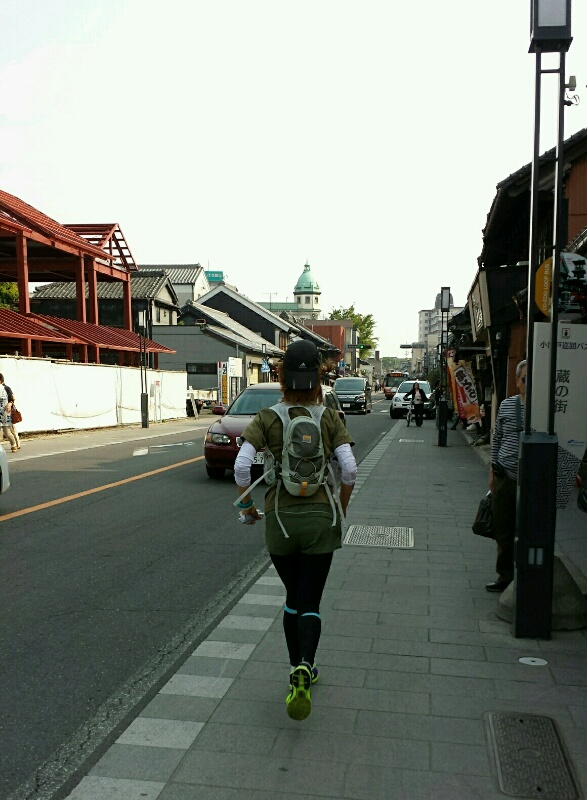
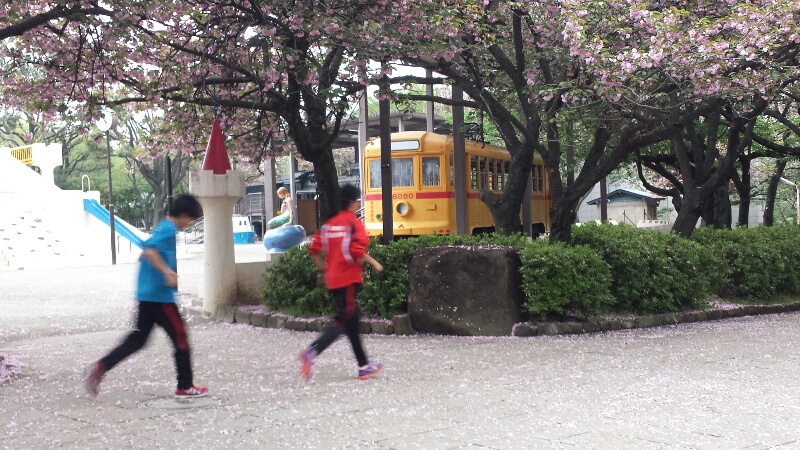
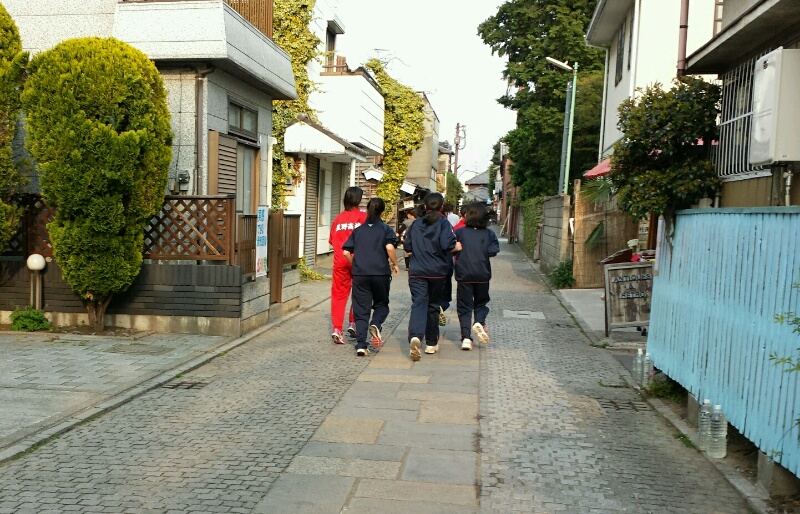
What I like about taking spontaneous snapshots of runners is that the pictures portray running in its most honest form – no staged ones.  I remember one Christmastime, I took snapshots of runners in Boracay Island, Philippines. Similarly in Japan, I took few running pictures in springtime and wintertime, of which I’ll share today.

image

Presumably an ultrarunner who has started very early somewhere, and still running by noon here in Kawagoe

image

Boys running in Asakuyama Park at springtime in Tokyo

image

A group of school kids running in Kawagoe

Egghead Octopus Snack

image

Cute like an alien infant

To retain the figure of the marinated boiled baby octopus, someone thought of filling its head with boiled quail egg. Or perhaps, the idea is how to eat whole quail eggs in an innovative way – by using octopus head as edible packaging. Whatever it is, the outcome is an appealing, appetizing and filling snack. I shall never forget how I stood near the skewered stuffed octopus table at Nishiki food market as I chewed the egghead in wonderment.

image

One way of eating quail eggs is to stuff it in the head of a baby octopus

Cute Despite its Macho Function

image

Takaoka

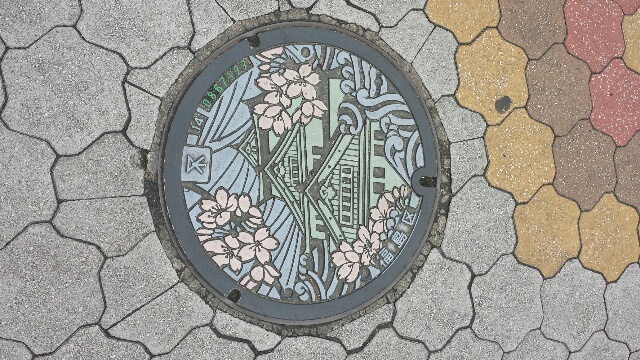
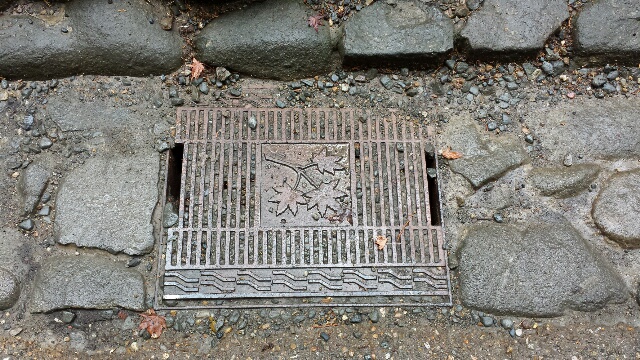
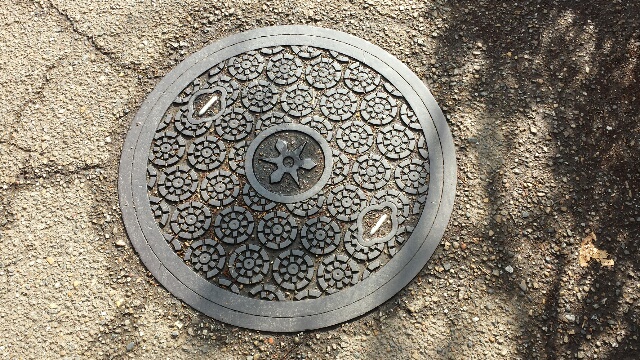
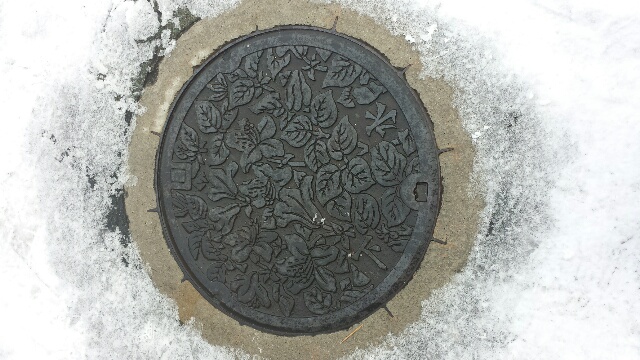
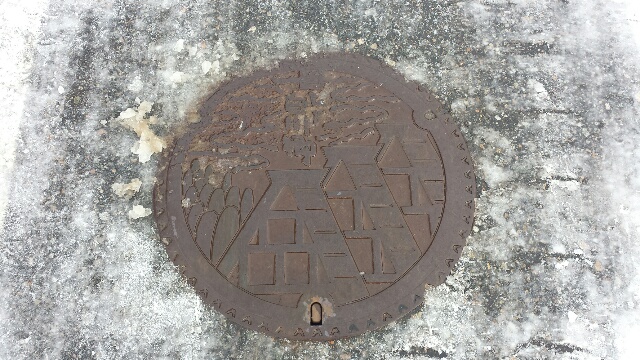
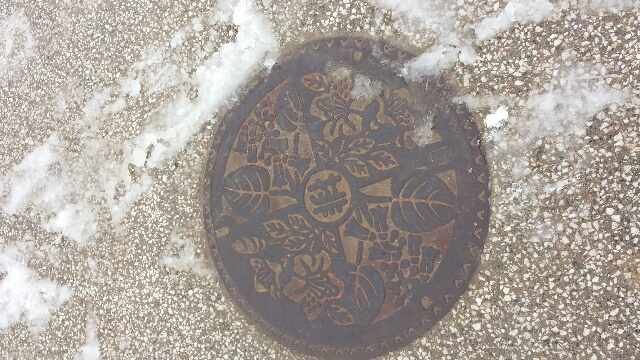
Only in Japan where an object that hides the sewer, or keeps you from falling into the hole, can be so cute despite its macho function.

image

Osaka

image

Kyoto

image

Kyoto

image

Hida-Takayama

image

Shirakawa-go

image

Ainokura in Gokayama Region

Ikura at Nishiki Market

image

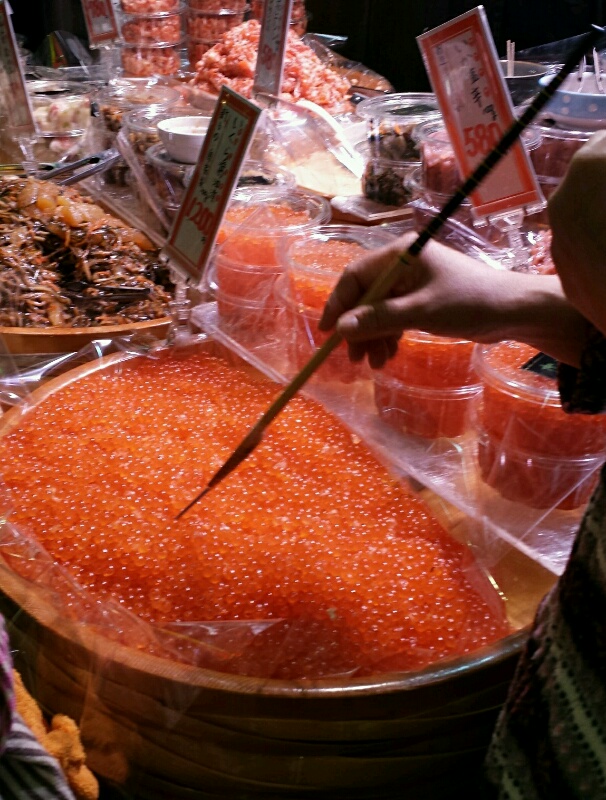
Salmon roe locally known as ikura are those orange spheres and usually sold like this – without its sac. Tastes quite similar to lato in the Philippines with its burst of subtle saltiness that initially I thought it’s a kind of seaweed.

image

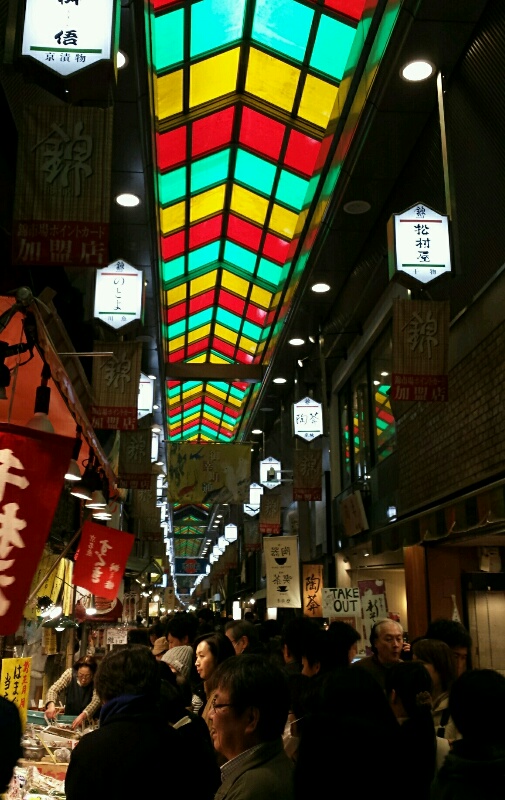
Nishiki market where I took snapshot of the ikura. Pretty crowded as this was New Year’s rush

Inu-Yarai, a Singularity of Kyoto

image

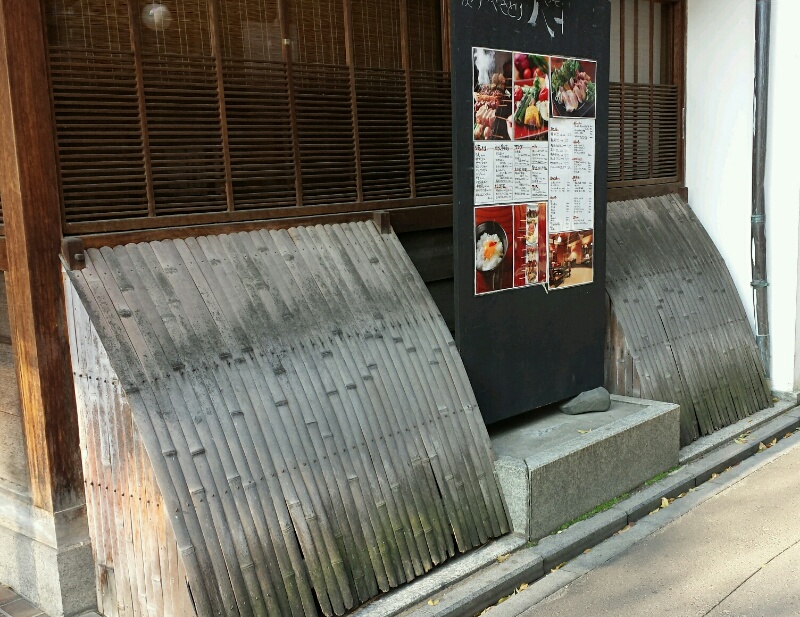
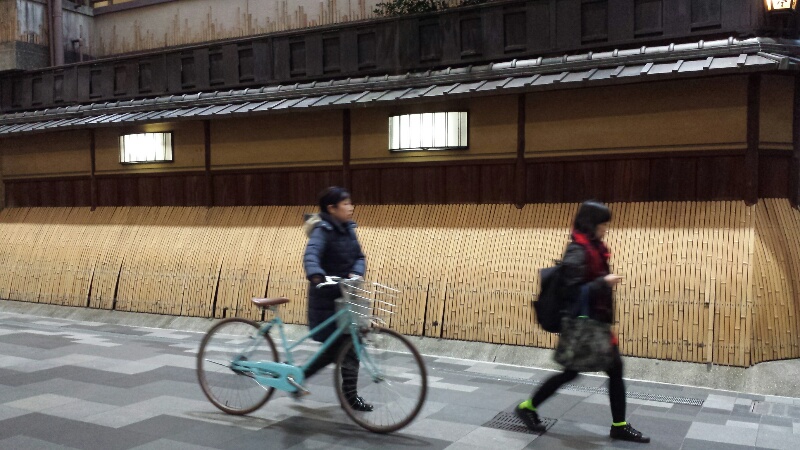
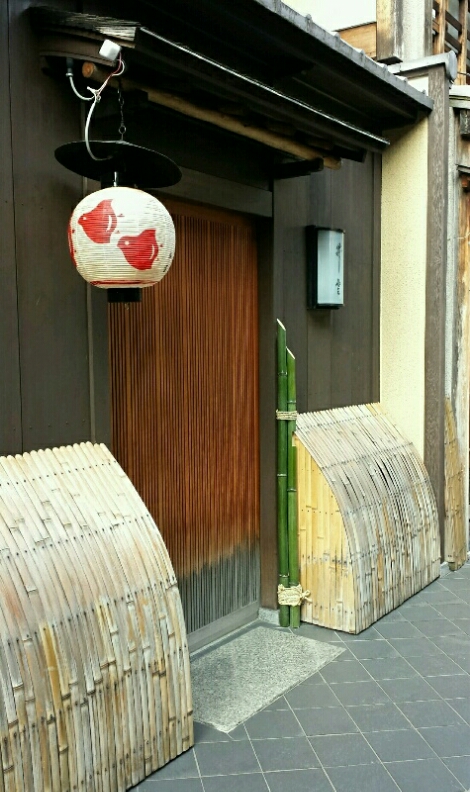
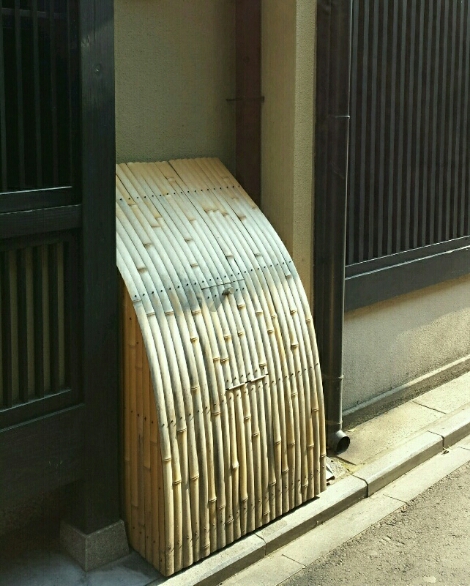
Whereas the curved split bamboo gutter cover (inu-yarai) design of Kyoto traditional wooden houses came to be for various purposes in the old days such as protection of the wall from dog pee, or horse dung, or rain falling on its roof, and or from eavesdroppers.

image

Today, I suppose inu-yarai is used as concealment for unsightly gutter, pipes, and faucet from the street point of view – something neat and attractive yet something functional. Inu-yarai is therefore a noteworthy fragment of Kyoto’s identity.

image

image

image

Off Duty Scarecrows

Edible Winter Ornamental Plant

image

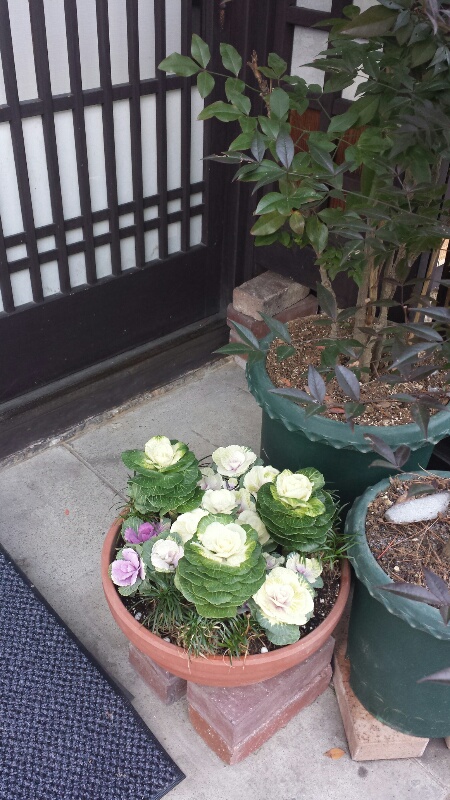
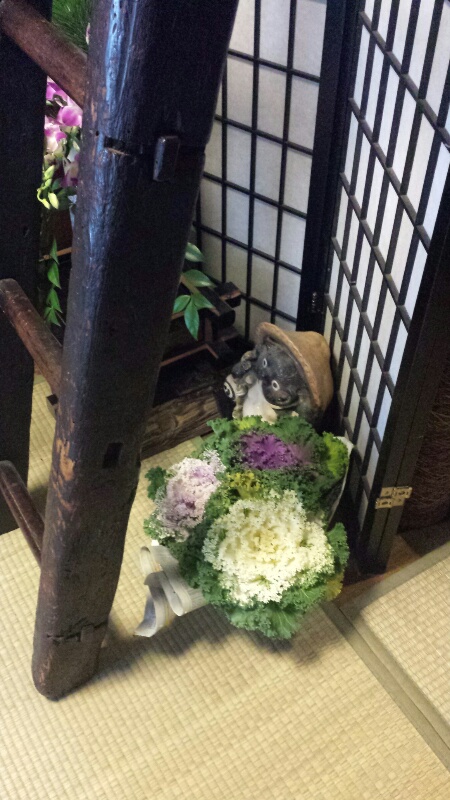
I have noted the presence of potted kale in various places in Japan this winter. From what I gather this vegetable is frost resistant and that is why it is pretty common at winter time though not for eating but for the beautification of their doorsteps.

image

New Year Ornaments in Japan

image

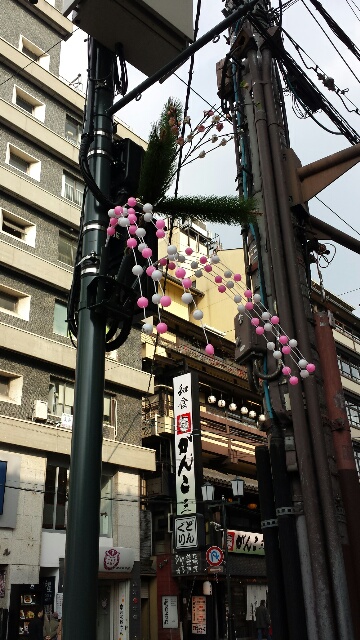
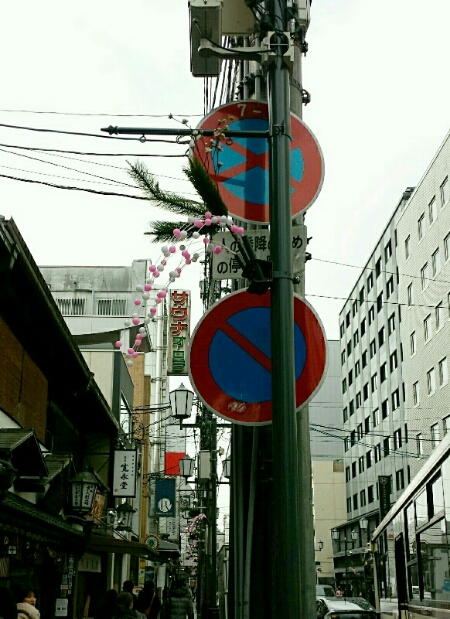
Kyoto street posts with pine branches and tiny pink round balls

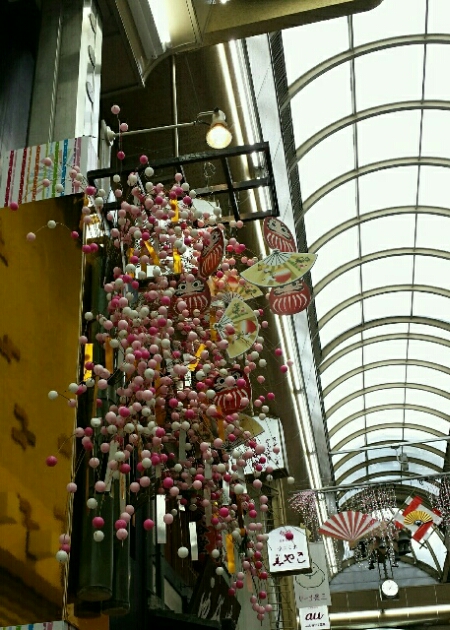
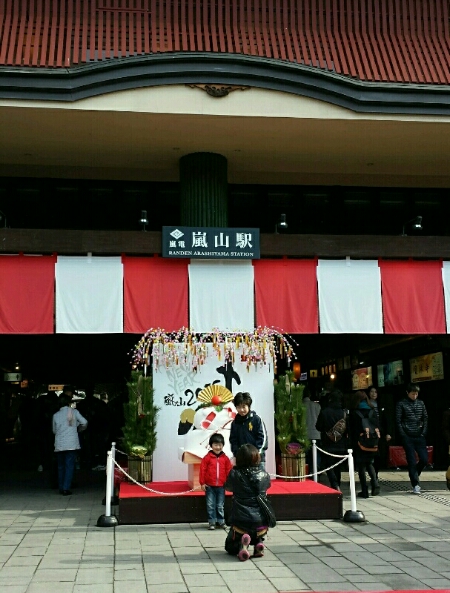
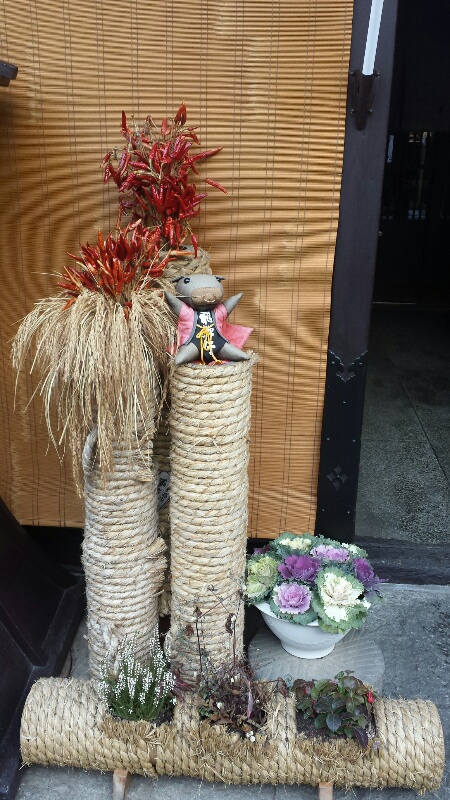
In the Philippines there is absence of New Year ornaments. We celebrate the event with fireworks, noisemakers, and food, including trays of round fruits on New Year’s Eve. But there are no traditional decorations unlike in Japan where in the days leading to this event, one can see ornaments like bamboo, rope, round pink balls, and pine branches. This was a curiosity to me that I took few snapshots of the ornaments.

image

image

More tiny pink round balls in this shopping street

image

New Year decoration at Randen Arashiyama streetcar station

image

Ropes as New Year ornament too