Tag Archives: kakanin

Aling Emma

image

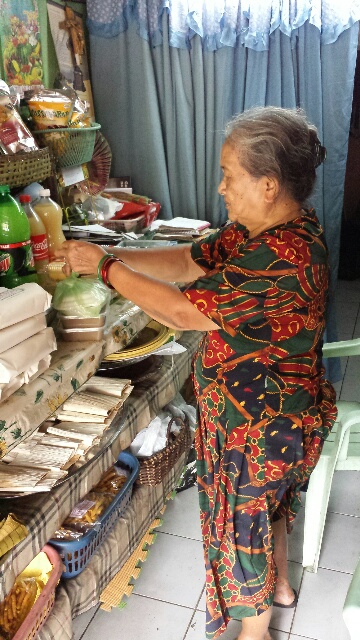
Aling Emma in her daster

For years I would buy espasol, bibingka, and most frequently the Pinatuyuan sa Gata freshwater shrimps viand from Aling Emma. Her shack of a shop is in Pagsanjan, Laguna along the main highway in the poblacion. One day the shop was gone from the old location. Then, months later I was able to locate her to this new one, still in the poblacion and not that far from the original one. It’s still a shack, which I like. I’m just truly glad that there’s still Aling Emma and her tiny food shop, my favored stop in Laguna.

image

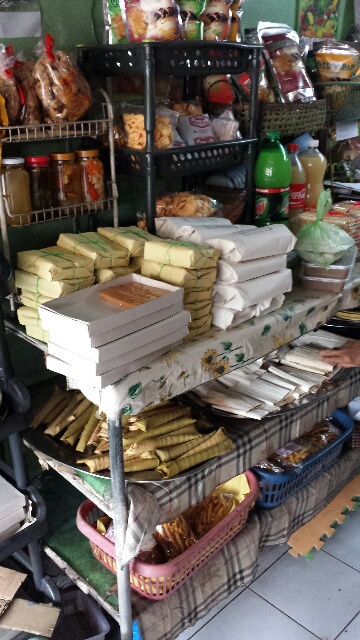
Espasol, suman, tikoy, vinegar in soft drinks plastic bottle containers, fish crackers, shing-a-ling, chicharon, etc.

image

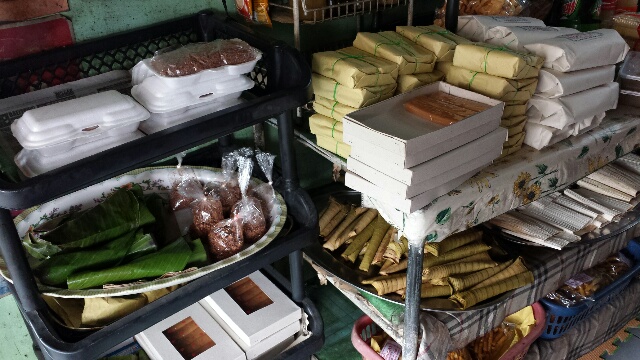
Assortment of rice cakes and the pinatuyuang hipon sa gata (inside those stypor containers at the upper left side)

image

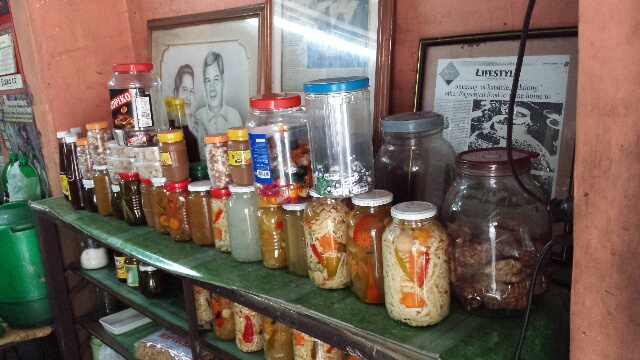
Pickled vegetables

image

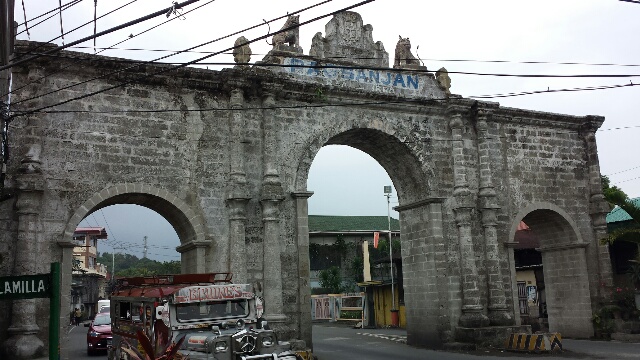
The gateway to Aling Emma’s shop

Ondeh-Ondeh

image

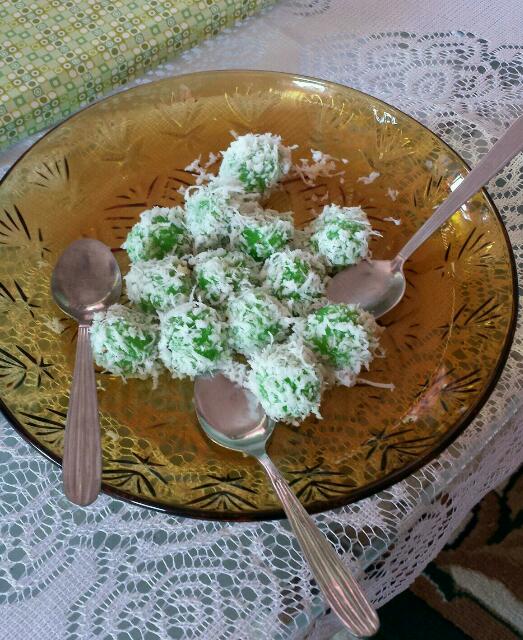
Ondeh-ondeh c/o Mr Ibrahim's hospitality at his traditional house in Kampung Morten

Ondeh-ondeh is one of the many variations of kuih (confection) in Malaysia. Made from glutinous rice flour, mashed sweet potato and tapioca flour, then filled with palm sugar, and covered in desiccated coconut. It’s their pichi-pichi in looks and taste, minus the sweet burst of palm sugar at the core which I’m so fond about the ondeh-ondeh. See, even the name repetition of Filipino kakanin pichi-pichi is another similarity to the kuih.

image

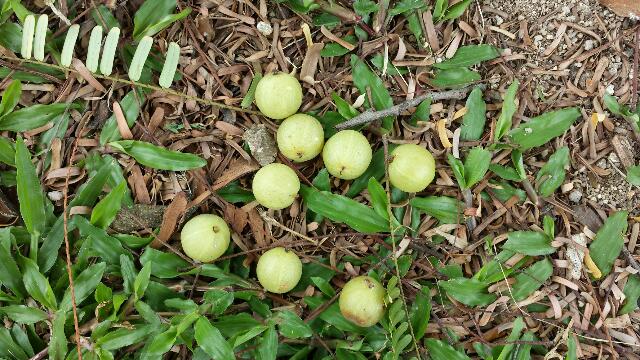
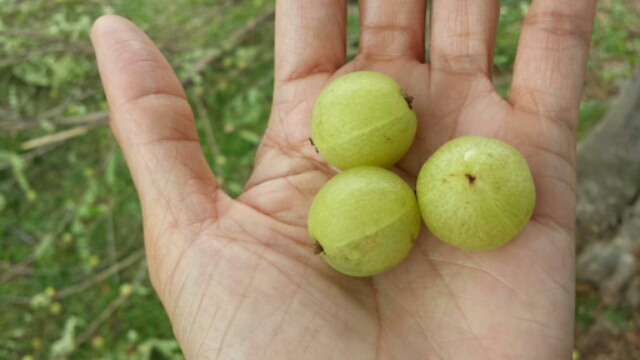
Fallen fruits of Melaka tree

Pertaining to the kuih’s green color and round shape, there’s a reason for that, which made it distinctly Melakan.

image

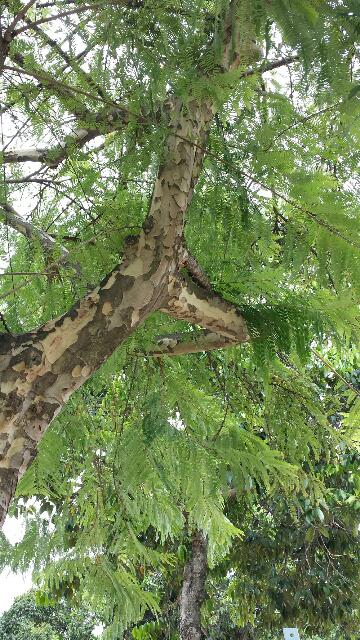
I'm pretending to be Parameswara looking up at this Melaka tree

Notably, ondeh-ondeh’s other name is Buah Melaka (translated as Melaka Fruit). So the kuih got its name and appearance from Melaka fruit like how the Melaka State got its name from Melaka tree.

image

My host says Melaka fruit is not edible

image

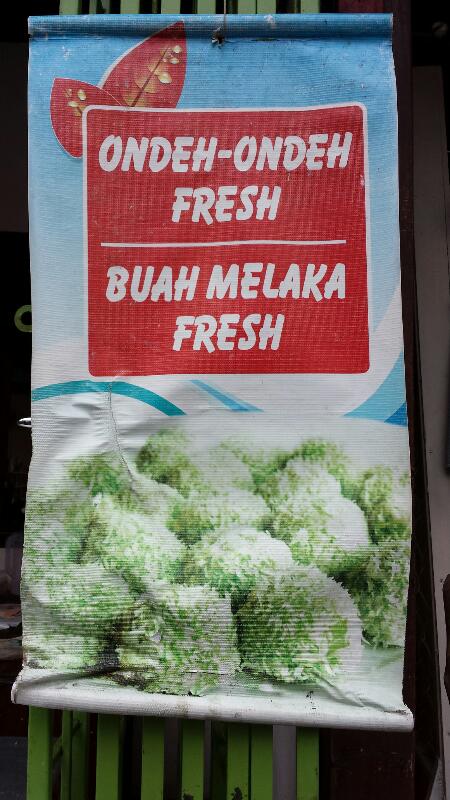
Ondeh-ondeh's ad somewhere at Jonker street

The Making of Puto Maya

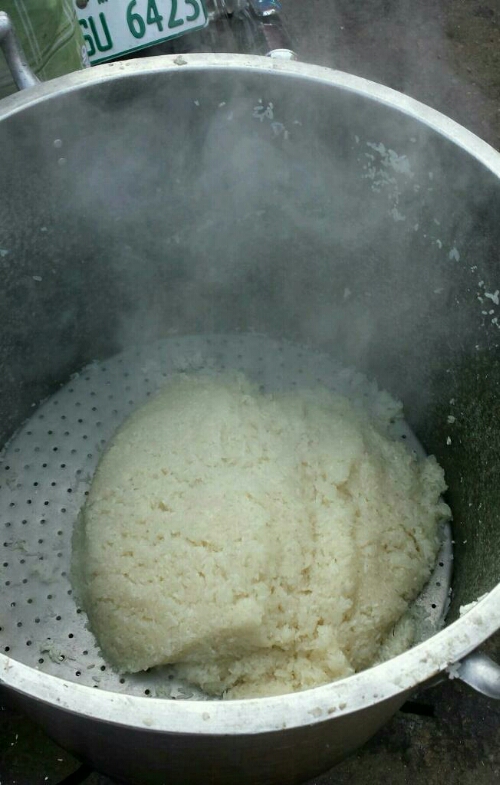
I chanced upon this guy steaming glutinous rice and about to make puto maya in Carbon Market. Here’s a photo narration in the right sequence of this guy’s method in making puto maya.

image

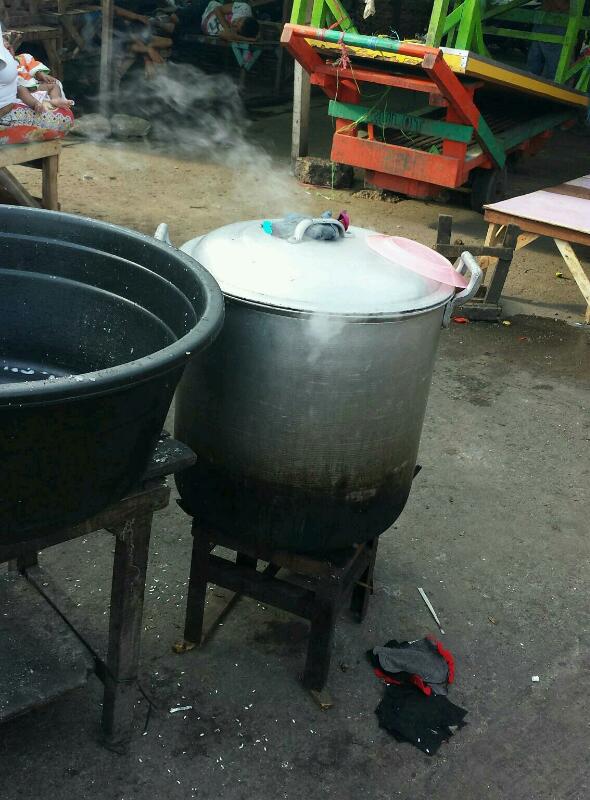
Steam the glutinous rice (bugas pilit) al dente in the caldero

image

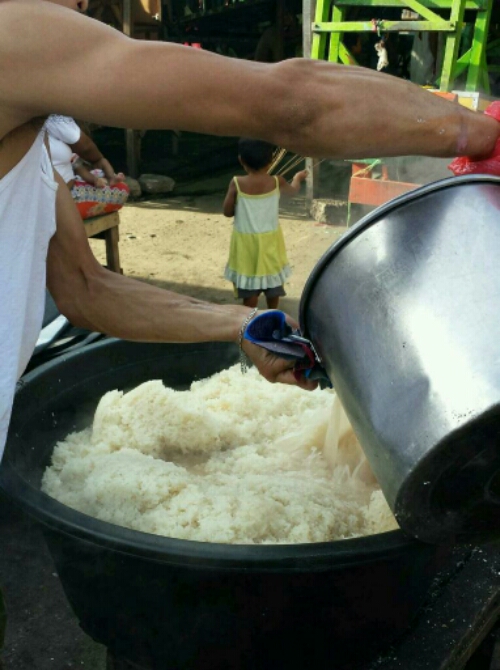
In a sando plastic bag covered hand, use plastic plate to transfer the steamed pilit into a tub

image

Prepare a mixture of coconut milk (gata) and sugar with salt

image

Pour the gata onto the cooked pilit

image

Mix well the gata with the cooked pilit using the versatile plastic plate

image

Put the well mixed pilit back in the caldero

image

After putting everything back, steam again until fully cooked. From what I gather from the guy’s conversation with another person, this puto maya was ordered for a wake

image

A jolly puto maya vendor in Carbon Market. Another type of glutinous rice for this one known locally as tapol. My favorite

image

Got some puto maya from the jolly vendor

Unidentified Kakanin in Japan

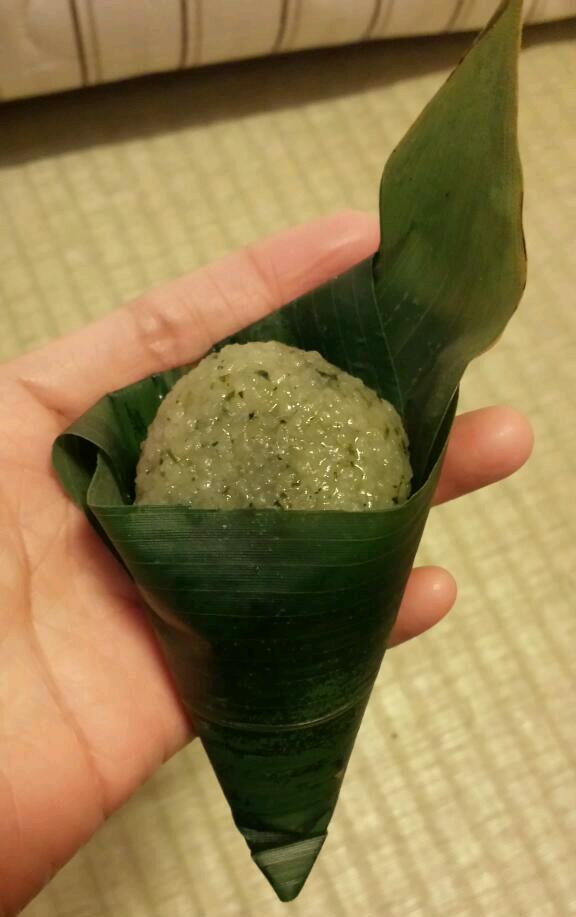
image

Not far from mochi taste at all

Looks like Philippine kakanin (rice cake) with its sticky rice and unidentified leaf packaging. However, it has bean paste filling which is very common in traditional confections of Japan.

Tricolor Rice Eats

Rub-a-dub-dub, three sticky rice thing in a tub.
And what do you think they were?

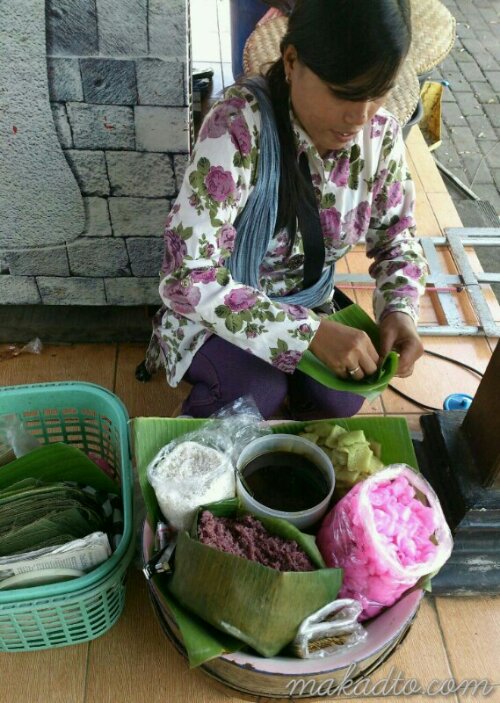
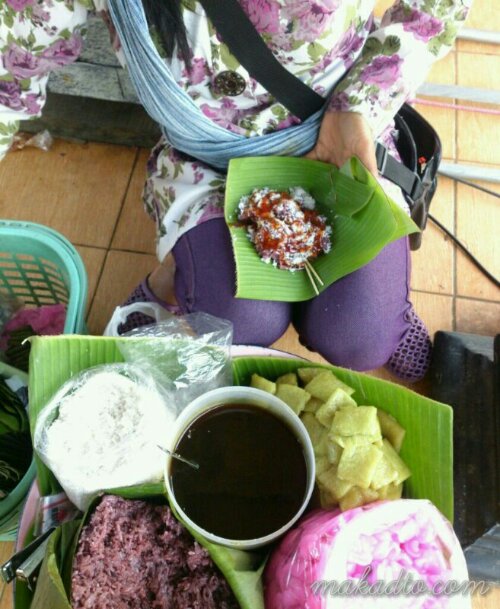
This lady vendor in Prambanan Temple Compound has three appealing variations of sticky rice snack where the texture and taste are similar to a couple of glutinous rice based kakanin in the Philippines.
image

The purple one taste like puto maya while the pink one looks like an odd-shaped mochi with no filling (I was too full of the purple and green stuff to try this one, and its color isn’t natural that’s why).
image

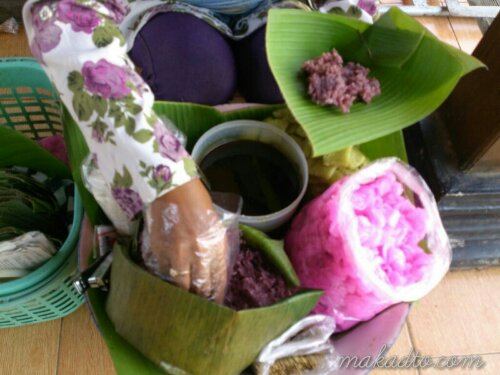
The green thing that’s more visible in the photo below taste like suman sa lihiya but presented in tiny square bite size.

image

Sticks as utensil and banana leaf as plate

Whichever color you’d choose, they’ll be served with that latik at the center of the tub (sugar-coconut syrup), and garnished with grated coconut meat.

Yaya’s Alupi

How yaya cooked alupi (kamoteng kahoy suman).

image

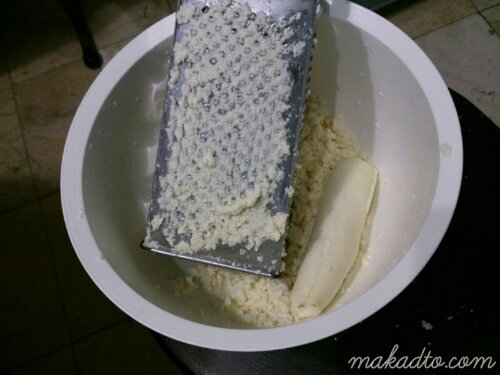
Grate the cassava

image

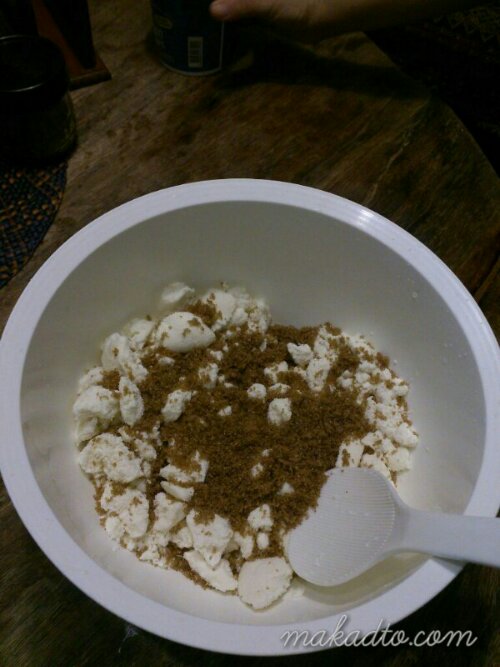
Using a cloth squeeze the grated cassava dry then add brown sugar

image

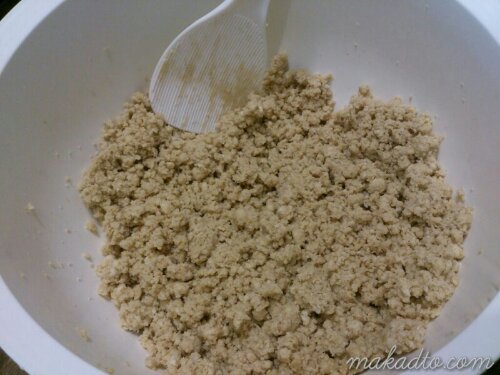
Mix well the grated cassava and brown sugar

image

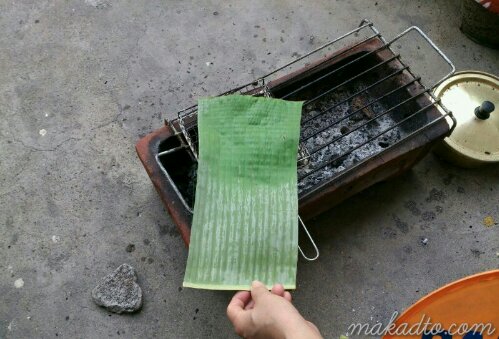
Next prime the banana leaf by putting each over live charcoal

image

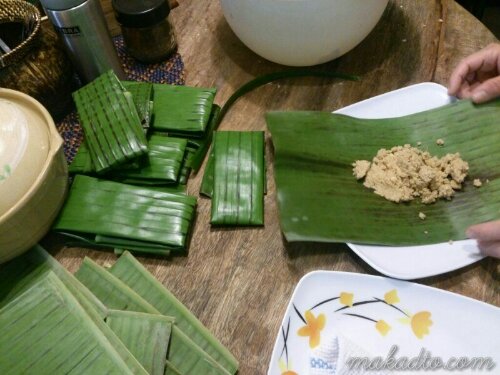
Wrap the mixture in banana leaf

image

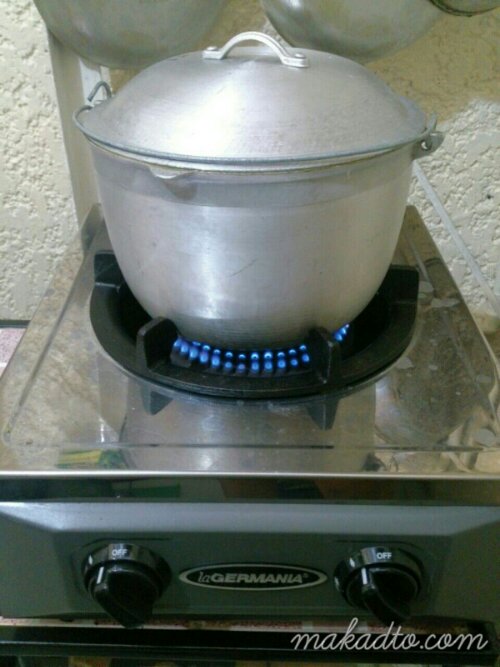
Boil in caldero

image

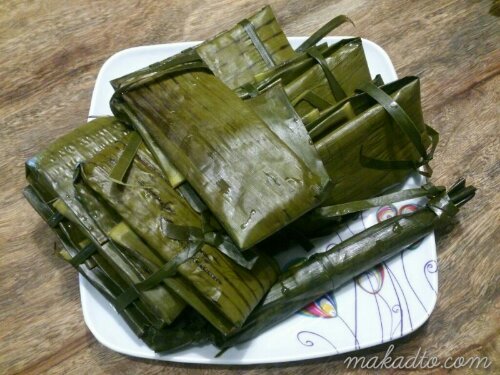
Presenting yaya's alupi

image

Bombon’s Binamban

Binamban is the rice-based delicacy of Bombon town. The first time I had this, a bundle was given to me when I won first place in a 14 km foot race during Binamban Festival where I also saw several binamban vendors that time near the church area. Recently I find myself in Naga so I made a side trip to Bombon just for this unforgettable kakanin. I didn’t see any vendors near the church and it was a Sunday. I went in the palengke area beside the church and bought the last five pieces I could find at 5 pesos each.

image

Of all the kakanins I've tried, this is a favorite of mine

image

Glutinous rice flour, brown sugar and shredded coconut are the ingredients of this rice delicacy. Coconut fronds for the packaging.

Alupi na Mais

image

A suman type kakanin but made from corn and wrapped in corn husk to distinguish from the common alupi which is the kamoteng kahoy (cassava) suman wrapped in banana leaf

Green Pinipig

Ibos, Bot-ong, Suman

Glutinous rice being the main ingredient of these kakanin trio of Bacolod: ibos, bot-ong, suman.

image

Ibos in coconut leaf packaging

image

Bot-ong in banana leaf packaging

image

Bot-ong and ibos without the leaf packaging

image

What one should expect when we say suman in Bacolod (known as biko in Cebu and Manila)

Calasiao Puto

image

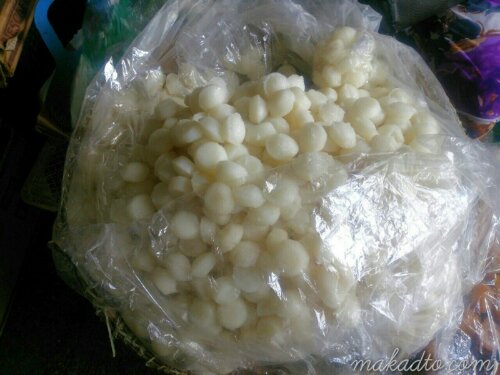
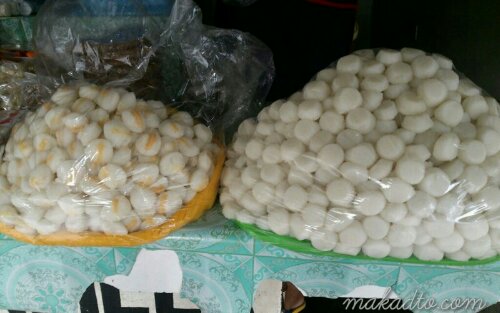
Tiny steamed rice cakes where a kilo of it in Lingayen public market is cheaper than in the stalls in Calasiao town

image

Calasiao puto is the only kakanin I know that is sold by weight

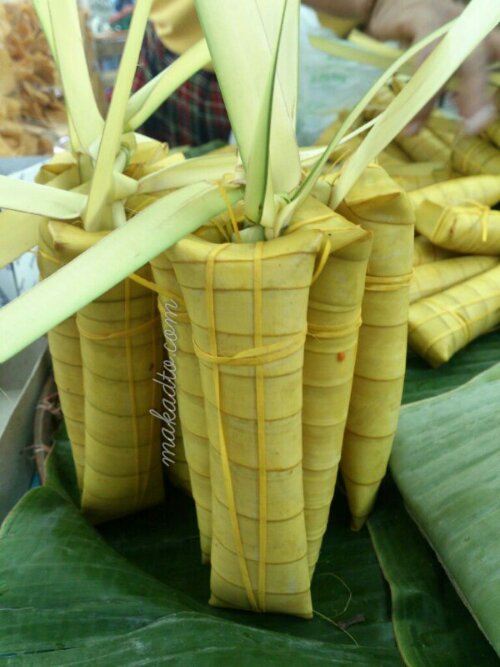
Coconut Leaf Packaging

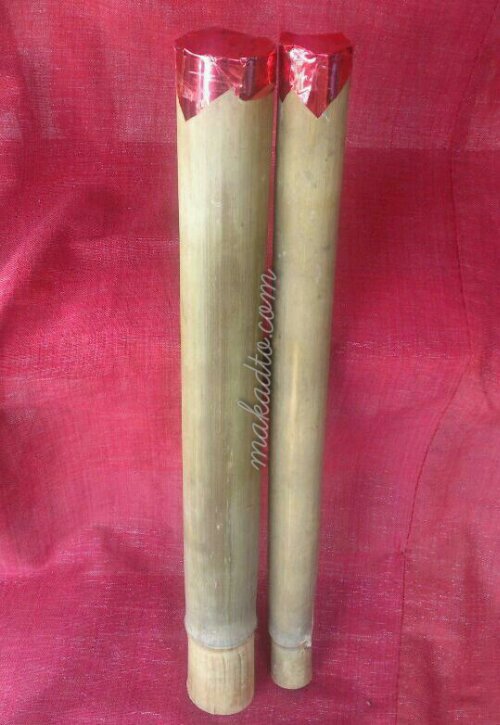
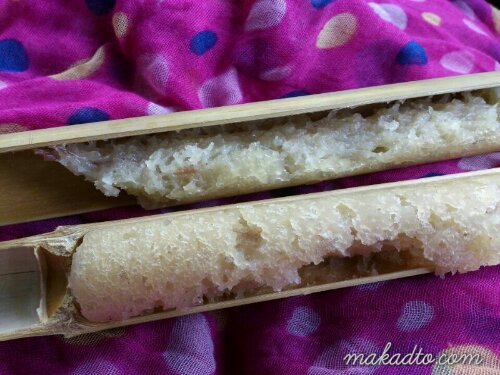
Tinubong

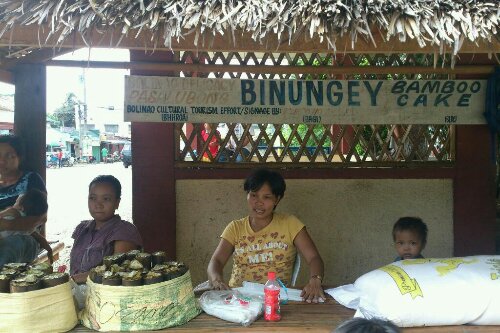
Bamboo Cake

Rice Cake Cupcake

Also known as bibingka.
There are quite a number of variations of bibingka all over the country and this is just one of those.

image

Banana leaf as cupcake liner instead of the usual paper in normal cupcakes

image

Mini bibingka in Jaro

Binut-ong

Made from Rice

Sagmani and Binakol

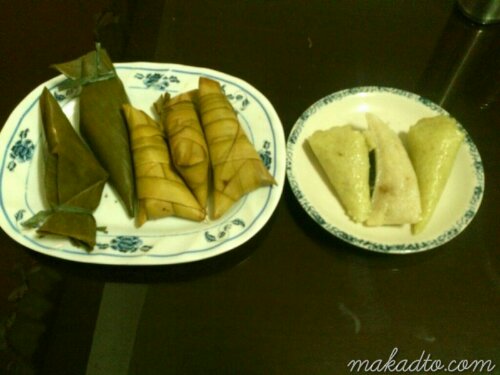
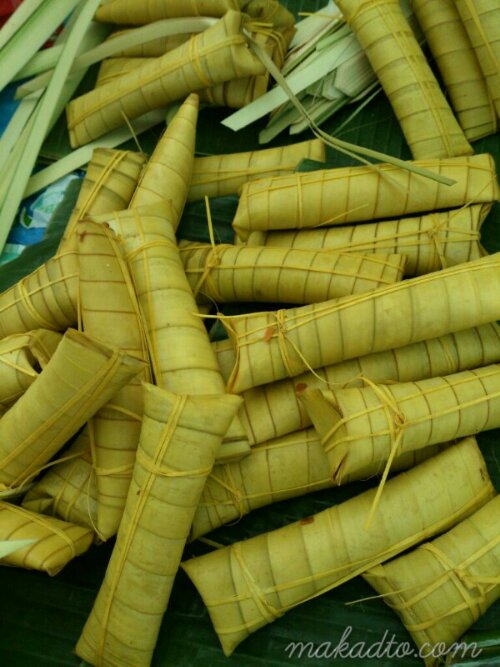
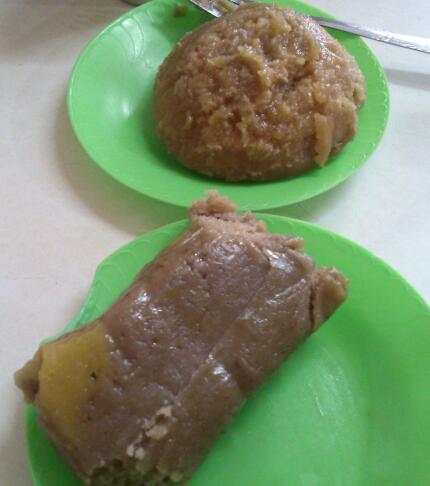
Native delicacies like the sagmani and binakol in the picture below, and all other types of kakanin and suman, are not only delicious and filling, but they are earth-friendly too with their plant-based packaging.

Image

Image

binakol (top), sagmani (bottom)